EU Matrix Atlas › Policymakers
EU Policymakers · ATLAS
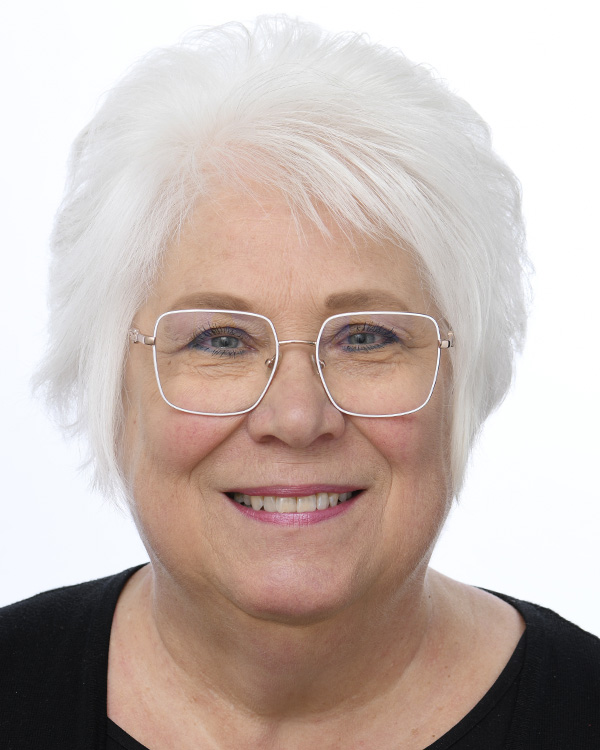
Marina KALJURAND
Policy topics Marina KALJURAND is active on
What Marina KALJURAND has said (16)
- 2026-07-15 “Thank you, Aurora. And on behalf of the LIBE committee, I would also like to welcome Miss Bruna Sheko to today's meeting. I will just give you an idea about today's debate. It will be organized as follows. After the presentation of Miss Sheko, there will be two rounds of speakers who will have two minutes each to raise their questions. After that, Miss Sheko will be given three minutes to answer each of the questions.
Should we have time for catch the eye, we will allow for one-minute questions and two-minute replies, but that we will see in due course of the discussion. Having said that, I would like to invite Ms. Sheko for your opening presentation. You have seven minutes, please.”Privacy & detection of online child abuse
- “So, colleagues, let's continue with our next point on on the agenda, which is Labor Committee mission to the Cepol to Hungary, Budapest from the 16th to 17th of September last year. And the delegation was composed of Miss and Miss Dolors Montserrat, and they had the opportunity to exchange views with senior staff on the management of the agency. They also took stock of Sepals training programmes on counter-terrorism, serious and organised crime and cybercrime. The Commission monitored firsthand the extent to which Cepol Cepal integrates into its training curricula. The priorities of this committee and Parliament, such as fundamental rights, data protection and cross-border cooperation, and it is my privilege to give floor to the head of delegation to ensure to present the mission report. And you have five minutes, please.”EU law enforcement cooperation in criminal matters
- “(16:41:52 – 16:43:44): Yes. Thank you. I'd also like to thank the speakers in this panel, but also in the in the first panel. When I listen to the discussions, there are 2 sides. Those who believe in age verification, assurances, estimation, whatever word you use, and the others who say that it's contrary to fundamental rights.
And at all these discussions, they are sitting in different panels. And at all these discussions, I do see that there is any kind of convergence or coming closer to each other.
I belong to the school of professor Ramenburg and, Simon de Bruyler. I do not believe that age verification, assurance, estimations will change the picture. We need safe online for everybody. Unfortunately, we are losing the battle with public opinion.
So my question is to professor and to mister Brewer. What should we do to convince parents that instead of shutting everything down, politicians, parents, politicians, public opinion, instead of shutting verification, introducing new rules, let's start implementing what we have, and let's do it responsibly.
And I also listened to what, what the other speaker said. In on paper, everything's right. Lawful age verification, all the principles that have been listed, enormous studies, but doesn't work in practice.
In practice, we have the app that was described by the commission and severely criticized by your panel. So can we really do a product that is safe, secure, lawful, and, respects privacy? Thank you, missus, Kaludan. And I know I'm putting you in a bad position. You you had just have 30 seconds. I'm sorry. Professor Rallenberg. I thought I have 90 seconds. Yeah. I know. 90 seconds. Yes.”Age restrictions on children's access to social media · Safety features & content control for child protection online
- “Thank you. President. Commissioner. Dear colleagues. Child sexual abuse is an extremely cruel crime that leaves the victim to deal with decades of trauma. In order to prevent our children, we need to make sure that there is no impunity for these crimes and that victims get maximum help and support. Today, I have three messages. First, to the victims and survivors of child sexual abuse. We, Mathieu, we listen to your stories and we heard you. We need to ensure that victim gets all the support needed as fast and efficiently as possible, even if the crime has been not formally reported. It is during the time of the most intense trauma that victims need most support, and they should not be denied it because they were not ready to go to police. I would like to underline also the importance of helplines, online chats as anonymous channels and reporting obligations that can be a lifeline for victims. Secondly, to the council, on average, a victim will report a crime of abuse that happened in the childhood when they are over 50 years old. Yes, 50. It can take even longer to ensure impunity. We need to abolish statutes of limitations. It is crucial to report and adjudicate these crimes even if time has passed. I urge the Council and Member States to rise above the 27 unique jurisdictions and give our children fair and equal protection across the EU and in all member states. And finally, to my colleagues in this House, I would like to recognise the work of the rapporteurs. Shadow rapporteurs. Negotiations were tough, but today I can say that the compromise that we reached is ambitious and strong. So I urge you to vote for the unanimous report. Our negotiators need strong and ambitious mandate. It is our duty. Thank you.”Privacy & detection of online child abuse
- “Thank you. And this concludes our before conclusion. I would like to note that the deadline for amendments is set for Friday the 30th at 12, and the committee vote is scheduled to take place on 24th February, and this concludes the agenda. This agenda point, and we will continue with point number eight. Epa study on the proposal for a horizontal equal Treatment directive. Complementary impact assessment.
***EPRS Study on the proposal for a horizontal equal treatment directive: complementary impact assessment”EU policy on integration and ethnic, racial and religious discrimination
- “Thank you. Mr. Shinichi. And I would like to remind you that the report written report is available in the meeting documents. This concludes the point of agenda and we will continue now with conclusion, on behalf of the European Union, of the agreement between the European Union on the one part and the Republic of Ecuador on the other part, on cooperation between the European Union Agency for Law Enforcement Cooperation, Europol and Ecuadorian authorities competent for combating serious crime and terrorism. And dear colleagues, I would now like to invite rapporteur Mrs. Nicolas Bartoszek, who will present her draft recommendations in the consent procedure related to the agreement. So, Mrs. Bartoszek, you have four minutes for your presentation.”EU law enforcement cooperation in criminal matters
- “Thank you. I would like to thank all the presenters. I would like to thank colleagues who participated in the discussion. That concludes this point on agenda. And we will continue in a couple of seconds with point number nine, the updated rule of law checklist of the European Commission for democracy through law of the Council of Europe Venice Commission. Thank you.
***The Updated Rule of Law Checklist of the European Commission for Democracy through Law of the Council of Europe”EU Supervision of the Rule of Law
- “Dear colleagues, I am pleased to open now our next agenda point, the presentation of the study on the on the proposal, so-called horizontal directive from 2008. It is the proposal for a Council directive on implementing the principle of equal treatment outside the labour market irrespective of age, disability, sexual orientation or religious belief. In 2024, during the Belgian Council presidency, renewed discussions resulted in amendments to the proposal as set out in a Council progress report, commonly referred to as a compromise proposal. This study was requested by the Committee to support our work on the legislative file by providing a complementary impact assessment of the compromise proposal. An independent and evidence based contribution to our scrutiny. We welcome the Commission's decision not to withdraw the proposal, which enables the co-legislators to continue examining it on the council side. Discussions have resumed at working party level, and we hope that member states could further advance on this work for the Parliament. The study offers timely insights into the practical implications for Member States And the added value of a horizontal approach for fundamental rights. We trust that it will feed into our further work in Libya. I would like to thank the press for their contribution, and I would like to invite our guests to present the main findings of this study. There are also hard copies of the study available next to the entrance of our meeting group, and I would like to recognize our guests, Miss Andriana from DGs, who will give us a short overview on the file. Then we will have Flore, Gustave, legal adviser, and Charlie Petracco, manager at Milia Consulting, to present the main findings of the study. So, Miss Efthimiadou, we start with you. You have about three minutes for your presentation. Please. You have the floor. Thank you. Chair.”EU policy on integration and ethnic, racial and religious discrimination
- “Uh. Thank you. I do not see anybody from the left. I do not see anybody from the ESM. Which means that we can continue for one minute with one minute questions. And Mr. Lopez Aguilar, please. You have the floor.”EU public communication strategy
- “Because, needless to say, that both factors are important to make sure that we have safeguards and protection of the most vulnerable groups of women. And we have safeguards for a well-functioning, well-funded civil society. Then we can talk about workable and comprehensive strategy. I did not introduce anything revolutionary from my side. I focused on the areas that are labour competence, and I tried to strengthen the report on these areas as well, to add important calls to the Commission related to our competences. So I'll mention three three topics or three fields. First, it's on anti-discrimination as it is an important area to strengthen. Unfortunately, we see global backlash, including across the EU, against gender equality, LGBTQ rights and anti-discrimination. So I found it important to add provisions on that. Secondly, there is a chapter on our international obligations. Adherence to the multilateral world order and international obligations is currently being undermined within the EU, as well as globally outside the EU. So that is why I think it is vital to safeguard what has been achieved so far through international negotiations, international agreements, international law and after all, upholding internationally agreed conventions, for example, such as the Istanbul Conventions. It is a precondition for achieving equality, and third chapter might be more problematic.”Gender roles, equality and inclusion
- “Thank you, chair, and good morning, colleagues. And I would like to start with apologizing that you received my amendments only yesterday, very late after the working hours. It wasn't my mistake. I provided my amendments to the Secretariat on time. And I'm really sorry that you did not receive them in time enough to have a better look at the amendments, but at the same time, we have our first meeting of shadows of next week, and I am sure that then we will have time to go thoroughly through the proposals and have a good discussion. So to start with, I would like to thank the rapporteur, Marco, For his draft report on the gender equality strategy. I would say it is an ambitious strategy. It is a strategy with concrete legislative and non-legislative measures, and I am really happy to see that there are important, important parts already in the report on advancement of gender equality via intersectionality and gender mainstreaming, and to ensure that the gender perspective is really integrated into all commission proposals. Also happy to see that the report focuses on heightening awareness and public knowledge through education and trainings, also highlighting the need for continued support and funding for civil society organisations.”Gender roles, equality and inclusion
- “Our duty is to protect our children in the real world, as well as on the internet, and not only with speeches and with slogans, but with our acts. Listening to our children, listening to the representative organizations, and this is why I do not recommend it. Sensible to come up with the EU wide digital minimum age or a complete overall social media ban. This will lead to discrimination, and the social media ban is not something that's going to actually stop our children from accessing social media. If we really want to protect our children, we must start with acting on the Digital Services Act. Um, also, we need to increase the awareness, um, with the parents. Um, and I am looking forward to proposals from the commission that do not discriminate against children. Only in this way we can guarantee the protection of minors on the internet. Thank you.”Age restrictions on children's access to social media
- “Thank you. I do not see anybody from the PFA group. I do not see anybody from the ECR group, which means that yes, I would now would like to invite on behalf of renew, uh, Mrs. Garcia Hermida. Van der Waal, please. You have the floor.”EU political integration
- “Thank you co-chairs and dear colleagues. To start with, I would also like to welcome our colleagues, but mainly our guest speakers, Mr. Moshe Popovski and Mr. Moshe Studach. Welcome to the joint meeting and on behalf of the Libe Committee, it is the internal security aspect that raises most concern when we discuss preparedness. Europeans feel increasingly unsafe. The perception of safety and security has been eroded to the point that when asked about the future. 64% tend to be worried about EU security. And this does not come as a surprise given the current situation. Russia has been waging online and offline hybrid campaigns against the EU and its partners to disrupt and undermine societal cohesion and democratic processes, and to test the EU's solidarity in Ukraine and with Ukraine. Our common external borders have seen a variety of ways in which migrants are instrumentalized in order to put border controls under strain and to create a feeling of security and threat, hostile foreign states and state sponsored actors seek to infiltrate and disrupt our critical infrastructure and supply chains, to steal sensitive data and position themselves for maximum disruption in the future. The EU's crime as a service and criminals as proxies. Security is the precondition for maintaining our values, as well as being a necessity for our economic success and competitiveness in a changing geopolitical landscape. If Europeans should be able to go about their lives free from fear, Air, whether on the street, at home, in public places, on the metro or in the internet. Member States and the EU as a whole need to become more resilient and better prepared to face and respond adequately to such threats. I am looking for today's discussion and I promise to be brief in my concluding remarks. Thank you.”EU law enforcement cooperation in criminal matters
- “But here I do hope also the support of of my shadow rapporteurs. I have added a chapter on security crisis and preparedness. It is following the Commission's recent proposal of the Preparedness Union Strategy. Needless to say, we see the need for the commission to integrate a gender perspective in their work on security crisis and preparedness. Either we are talking about armed conflicts or we are talking about natural disasters, energy poverty, climate change, and the cost of living crisis. We know that in many cases, in majority of cases, it disproportionately disproportionally. It has disproportionately big impact on the most vulnerable individuals and groups, including women. And that is why it is essential that gender remains a cornerstone of the response strategy. I would also like to underline the importance of women's equal and meaningful participation in the prevention and resolution of conflicts, peace negotiations. Peace negotiations. Peace building, post-conflict reconstruction. So that's, in brief, what I have prepared for you. Dear colleagues, I am looking forward for our next week's first discussion, Shadows Meeting, and I hope that we will be able to provide useful, smart, good additions to the original report by the committee. Thank you.”Gender roles, equality and inclusion
- “Dear colleagues, let us now turn to an important development in the area of the rule of law. At its plenary session on the 12th and 13th of December last year, the Venice Commission of the Council of Europe adopted its updated Rule of Law checklist. We are familiar with the Venice Commission's Rule of Rule of Law checklist, which has played a standard setting and harmonizing role in defining and applying the concepts of the rule of law across Europe. It does not create binding law, but it has become one of the most authoritative, Europe wide reference tools for assessing rule of law compliance, while allowing for pluralism of constitutional arrangements in the Member States. In previous resolutions on the Commission's annual Rule of Law report, the European Parliament has called on the Commission to incorporate more elements from the Venice Commission Rule of Law checklist in those reports, Including a chapter on equality before the law and non-discrimination. We understand that the updated version of the Rule of Law checklist reflects new challenges, particularly those arising from technological changes, rule of law, regression and growing private sector influence, including in relations to platforms. With that, I would like to welcome to our today's hearing, Professor Rafael Bustos Gisbert. Mr. Bustos Gisbert is a professor of Constitutional Law at Complutense University of Madrid, and is member of the Venice Commission for Spain. Professor, you will have from 10 to 12 minutes for your presentation, and after that it will be followed by two minute questions and answers. Remarks from the political groups. Professor, please. You have the floor.”EU Supervision of the Rule of Law
© EU Matrix · atlas.eumatrix.app · Sign in for the full analysis: scored positions, voting record and engagement.