EU Matrix Atlas › Policymakers
EU Policymakers · ATLAS
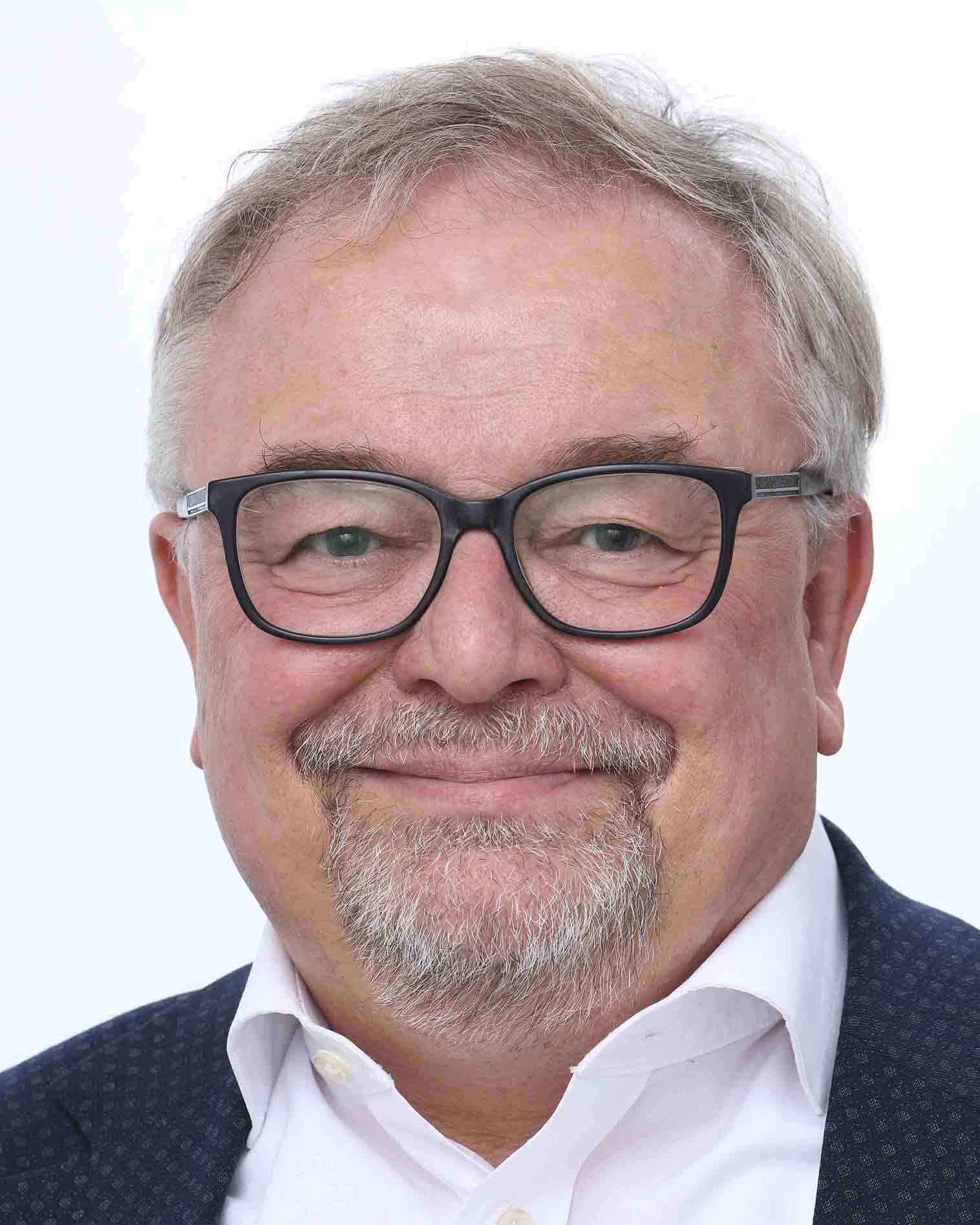
Jens GEIER
Policy topics Jens GEIER is active on
What Jens GEIER has said (27)
- 2026-07-14 “President. Thank you very much, Madam Chair. I would like to speak German. I have a question for the General Director. Firstly, congratulations on your appointment. There are a number of points that we've already discussed, and I have to say apologies because I have to leave at 4 p.m.. I have another appointment, but I would have liked to have had an opportunity to spoken about this longer with you, but perhaps some other other colleagues will will chime in. Christoph Kraeutler and Mr. Eyler have asked a number of the questions that I wanted to ask. But I'm interested in the the complementary role of green gases. I believe that we could save on a lot of investment if we couple sectors and if we fundamentally think these things through and if we transform into into gas, perhaps we can transform and and save it and save some costs in the process. So I would like to know, what do you think about the is there a complementary role for green gas to play here in the electrification process? Thank you.”Energy (green transition)
- 2026-07-14 “Thank you, president. I would like to speak German. Yeah. As my for future president in Schuenasieu. Thank you very much that you're here today with us. I'm very glad to have this opportunity. We were talking about subsidies, and I think this is an important point. You talked about how successful CSAP had been. I agree with you on that. I could even say with a slight tone of irony, if it were a bit more comprehensive, it might be more successful because it would make it possible for member states to provide more money. And that's very necessary for industry, it has to be said.
Then secondly, according to the treaty, the commission has to review whether any subsidies are likely to distort competition. That's its mandate. I'm a social democrat, obviously. And if I question this, people tell me, oh, but you've got deep pockets in Germany. And if need be, you can support your industry more effectively than others when you need to make cuts.
Well, that may be true, but I might remind colleagues that in 2024, Enrico Letta looked at this whole issue in the context of the report, and he suggested that we have a European subsidy fund. My question, therefore, is whether the commission is discussing this. Can we genuinely nurture any hope that you're moving in this direction? Recommended by letter.
Thank you. Thank you very much. Obviously, the current situation is extremely complex and in a state of flux, not least because there are, unfortunately, wars underway, which we know all too well. We know what the implications of the Middle East conflict are. We know that America's withdrawn from the Paris Agreement, and this has brought great risks in its wake.
But we need to address them. We have got to look at how to facilitate support to the renewables industry, but at the same time, diversifying. We need to consider nuclear energy, for example, and we need geothermal investment too because otherwise, the competitiveness of our industry is under threat.
So subsidies, sure, but they really cannot be the full answer. We have to be careful what percentage they are in the budget. We also need to look at the ETS because of the implications internationally and financially. Obviously, we do need to try to consider how to manage the impact, but we can't just leave everything the same because that's no way to make progress. Thank you.”EU industrial funding (mechanism level: EU-pooled vs nationally-financed)
- 2024-11-05 “E-002412/2024 Answer given by Executive Vice-President Ribera on behalf of the European Commission 1. There is no ‘precedence’ as such of the general de minimis Regulation 1 over the Services of General Economic Interest (SGEI) de minimis Regulation 2 or the SGEI Decision 3 . For amounts of aid below EUR 300 000 for any period of three years, the SGEI de minimis Regulation and the SGEI Decision can be applied provided that the aid measure is granted to undertakings providing an SGEI. 2. The SGEI de minimis Regulation presents a certain number of advantages compared to the general de minimis Regulation. Indeed, the ceiling included in the SGEI de minimis Regulation is higher than the one of the general de minimis Regulation (EUR 750 000 vs EUR 300 000 for any period of three years). The SGEI de minimis Regulation is therefore a good tool for Member States wishing to grant small amounts of aid to undertakings providing SGEIs. The SGEI de minimis Regulation is however not the only instrument to support SGEI providers. Depending on the needs and the objective of the measure pursued, other legal provisions may be more appropriate. Indeed, if larger amounts of aid are to be granted, the SGEI Decision might be more appropriate. In particular for SGEIs meeting social needs, that Decision does not contain any ceiling for the compensations granted. 3. Certain Member States might limit their use of the general de minimis Regulation for budget constraints or policy reasons. The Commission cannot force the Member States to grant support under State aid rules. 1 Commission Regulation (EU) 2023/2831 of 13 December 2023 on the application of Articles 107 and 108 of the Treaty on the Functioning of the European Union to de minimis aid (OJ L, 2023/2831, 15.12.2023, ELI: http://data.europa.eu/eli/reg/2023/2831/oj). 2 Commission Regulation (EU) 2023/2832 of 13 December 2023 on the application of Articles 107 and 108 of the Treaty on the Functioning of the European Union to de minimis aid granted to undertakings providing services of general economic interest – (OJ L, 2023/2832, 15.12.2023, ELI: http://data.europa.eu/eli/reg/2023/2832/oj). 3 Commission Decision 2012/21/EU of 20 December 2011 on the application of Article 106(2) of the Treaty on the Functioning of the European Union to State aid in the form of public service compensation granted to certain undertakings entrusted with the operation of services of general economic interest (OJ L 7, 11.1.2012, ELI: https://eur-lex.europa.eu/eli/dec/2012/21(1)/oj)”EU Competition policy · EU social policy (political compass)
- “Thank you, Mr. President. Commissioners, ladies and gentlemen. How much money are we actually talking about? Well, if you look at the current budget, then. It's almost a 200 million. And, you know, we need to be clear about the actual figures that we're talking about here. And this is basically we're talking about the budget of North Rhine-Westphalia. We're not talking about huge contributions. We're talking about money, which is used to to fund European policy. And I think it would be better if there was more money and then we could pay for more research. For example, the experts that are. Uh, we are saying that we could increase our research by, uh, by seven fold or, uh, we know that this can lead to innovation, that can lead to competitiveness for Europe. So what must happen is we need a European budget which is in line with our challenges. And member states need to understand this and fund this year budget.”Size of EU budget
- “Thank you very much, chairman. Ministers, welcome to the European Parliament and to the Industry Committee. I'm going to be asking three questions. The first one is a little bit ironic. I mean, I've heard constantly heard from representatives of Polish parties that there is a need for fossil fuels. There is a phasing out plan from coal in Poland. And my question is a bit ironic, perhaps. Have you not publicized this plan enough? Because poles don't seem to know about this plan? Now, the second question relates to that I was involved. In the methane regulation negotiations. Now it has to be implemented if we want to protect the climate. But the problem is that, uh, methane emissions last a long time and the implementation is going to be problematic. So how's the Polish presidency going to be dealing with the implementation of the methane Directive? And then my third question, I've just come out of a special meeting of the US delegation of the European Parliament. So we have relations with Congress, and we're concerned that there are going to be efforts to blackmail us from the US in terms of the LNG price. We've already suffered that from Russia. So does the Polish presidency have or want to work on a diversification strategy for LNG? Thank you.”EU approach to energy security (home-made vs import sources)
- “President. Minister. Vice president. Energy prices are decisive when it comes to our industry and also for the quality of life of many families. Thus, we need to reduce energy prices. We used to have power plants where there was demand. Now we're producing renewable energy. Renewable electricity. The commission to look at geothermal energy. I want you to focus on that more now. Switching to renewables. Is something that needs to be part of a European network. We need to develop a grid, and we need to have a grid for hydrogen that would be forward looking. Otherwise, uh, it will affect prices. So we need to have measures from the commission that will drive the construction of the grid for hydrogen. Thank you.”EU energy infrastructure integration
- “Thank you, Madam Chair. I'm convinced that the right path to take is to allow European green products to have privileged access. We've talked about green steel on many an occasion. I'm just worrying that a label is not going to help. Because the preparedness for the car manufacturers to pay for green steel possibly would be linked to the wrong expectations of the desiderata of consumers. Green steel prices might make a difference when you're talking about where people are producing the cars themselves, because we're talking about low three digit figures that will make the difference. So maybe instead of a label, a quota for the calculation of CO2 emissions in the fleet would be a better marker if you want to help the markets. Secondly, the steel producers and other producers in that sector, are they actually going to manage to produce green? Of course, there's interaction between public procurement for green products and where. Companies need to be given some breathing room in producing the liquidity to invest in climate protection technologies and using the green market. So I think we seem to be taking the second step before the first.”"Buy European" provisions
- “Thank you, chair. So I was in the meeting. I wanted to be here at the meeting from the beginning, but, unfortunately, the traffic's been difficult. I'm looking forward to the joint work on this file, which is very important, but poses a few problems. And a number of us have already referred to that. This question of who is it who can, out of our partner countries, can be taken into account and seen as a European source of products. And so this Parliament's going to have to address that, but we'll also have to talk to the other institutions about that.
I would like to make a proposal that might not meet with probation by everybody here, but I think it could be a good idea. So access to the European market, this should be connected with good working conditions in the source country. So, working standards that people have the freedom of association to form unions, and there should be collective bargaining with the unions. And that would mean that we would also be able to create a filter which is compatible with EU standards. So it means it wouldn't be just dozens of other countries who are able to benefit from making Europe.”EU policy on labour exploitation in global supply chains
- “Thank you very much. I would like to speak German, so I'm very happy that the Commission is making progress with gender budgeting. We haven't really it's not been that long that we've actually demanded this, but this one is at 9% and then at zero is still the majority. Well, I think this is really hard to follow. I have seen that there have been other developments. In other words, the more you reflect upon it and and the more it's being used, Then you find out that that you can actually do gender budgeting. I think there is a problem with the scoring. I think exactly what Isobel said. Of course, if you write in a piece of paper that you have to build a metro in order to have a gender balance, that's really hard to follow the logic there. If you would say that public transport should function in such a way that one parent can move rather rapidly from the outskirts to the center, very. But while the other one needs to also be supported because they are responsible for taking the children to school, etc.. I mean, you have to make a contribution to gender equality. So I think with equality, I think I'd like to use that expression, because you have to ensure fairness. When you're looking at scoring, you have to say, well, what kind of time is involved in mobility and what means of mobility are being used? So if you look at we need some indicators to see how we could measure that kind of aspect. And in order to demand these kinds of indicators, well, I think this is something we should be whether we should be using this as the budget committee.”Gender roles, equality and inclusion
- “Thank you. Chair. I'd like to speak German. I do apologize for arriving late. I apologize, Mr. DaCosta. I didn't hear your introductory remarks. I'm very sorry, sir, and I'm going to have to improvise a bit. And if I raise something that you had already covered in your introduction or that colleagues have already covered, then just tell me, and then we can sort this out bilaterally. But my question is about the upcoming Space Act because. This is fundamental legislation for the EU. I think it's the first time we're doing it in this way, and my experience tells me that it makes sense to involve the agencies concerned. And there's one point I'd like to know your position on, which is about having a clear division of responsibilities between your house and the European Space Agency. Everything should be clear cut. So all of these questions which are still in the air, um, need to be addressed. It's impressive to see what value added is created by the use of our satellites. And all of us in Europe should have an interest in continuing along this path. But. I would really just like to get us input on many of the aspects of the upcoming Space Act. Thank you.”EU competences on space policy
- “I have a few concerns about the content. I mean, I don't know where the steel, for example, can be cybersecure or whether it should be. Perhaps the commission can explain that. But anyway, there are criteria and that's right. But I think it would be helpful if we could focus on them being either or criteria, and that we don't have an industrial product having to meet all of these criteria, because otherwise the number of products that would benefit from these kinds of rules would become very restricted. So I think we need something fairly broad because our industry needs some kind of room for maneuver. It needs to be possible to invest in the clean techniques that we all want to see. So I think it would be helpful if we could really focus on resilience in particular as a criterion, and we should also call on the Commission to ensure that the Industrial Decarbonisation Accelerator Act, under the heading of resilience, should ensure that European procurement really prioritises European industry and that should mean that European industry has some margin to invest. Thank you.”"Buy European" provisions
- “Thank you. Chairman, I have two questions. I haven't had an opportunity to study your research in detail, but there is a section I've seen on the legal framework for direct air capture of carbon. Now, the question of regulation is important in terms of costs. Hence my question to you. I'm sure it's in the study, but as I say, I haven't had an opportunity to read it in detail. So what's missing there in terms of the regulatory framework? Is it mature enough, the regulatory framework in the EU to enable direct air capture to start off straight away? A second question. If I bear in mind who you've talked to for your study. It seems that A joint undertaking might be a way of addressing this. Technology. This is something that the EU has done in a whole series of areas where we come across promising technologies and where what is at stake is to. Find a sufficient budget to support, uh, business and research and to bring them together in a targeted way. So perhaps this might be applicable to direct air capture. So do you have an opinion on that, on how we can implement work on this in the form of a joint undertaking. Thank you.”Carbon capture storage and utilisation
- “Thank you, Mr. President. Mr. Vice president colleagues. Well I am grateful that we have this, uh, steel and metals action plan from the commission. We've been calling it for a long time. This is a good basis. Uh, Mr. Séjourné and I'd like to thank, uh, the industry as well, because I think they've been involved in drafting this action plan to. Now, there are good things in this action plan. Many problems are recognized and addressed, for example, beefing up our trade defence instruments. And also, I welcome the fact that we are going to have a follow up rule for the so-called safeguards from next year. And also looking at Cbam. There are weaknesses there. They need to be looked at and dealt with, but we also need to look at the electricity market in Europe. There isn't an industrial price. That's something that needs to be dealt with by member states at the moment, and then checked by the Commission in Brussels against outdated criteria. So, Mr. Surgeon, please look at this and tell us whether the Commission couldn't do something. And then we now have to implement this plan because steel is important. Thank you.”Carbon Border Adjustment Mechanism (CBAM)
- “Thank you, Madam President. Commissioner, ladies and gentlemen. I would like to start by thanking the rapporteur. Anna, you've done an excellent job. This is a very good report, which has given us a great deal of material for our further work on the energy transformation we need to improve the efficiency of energy grids in Europe. We have to create Europe wide networks for energy. That's one of our objectives. We have to lay the foundations for that and to do that, as the report points out, we will. We have to ensure that we link digitalisation and decarbonisation. That's a political and business imperative. It's important to note that the European Investment Bank has provided a guarantee of €1.5 billion Euros, making this available to ensure that manufacturers of components for the electricity grid have the support they need to ensure they can hire staff and guarantee security of supply. It's also of essential importance. The commission's proposal to harmonise methods for calculating the capacity of grids has also been proposed. Thank you Commissioner. That should be implemented over the next quarter. It's very important that we keep charges for grids under control. Households and businesses pay high bills for electricity and network fees. We can't allow this to continue. High energy costs are a real social problem, and we have to try to find solutions both for climate and for employment.”EU energy infrastructure integration
- “Thank you very much. I would like to speak in German. Um. Thank you very much. First of all, to the specialists that we've heard this morning. Very compact and impressive input. My impression is that that we lack everything money, cooperation, perhaps not institutions which could cooperate, but general cooperate and decisiveness to act. I'm a bit alarmed by a report from a German authority dealing with security risks as saying that a lot of the German offshore wind parks. Could be switched off from outside Because turbine maintenance is done elsewhere, because the turbines haven't been produced in Europe. That's a serious security gap, in my opinion. We could try to circumvent that with Buy European. Is that a strategy in your experience? Sort of systematic way of finding security gaps in the civilian domain and to try to replace uh services with European, um, businesses carrying out maintenance. And also, could you say a little bit more about the need? Uh, well, I've understood that military and civilian, uh, bodies have to work together, but how would that work practically? Could you give us a bit more information when we're working on cyber security. Thank you very much.”"Buy European" provisions
- “Thank you. President. I'd like to speak German. Just a general political comment. Given the political situation that we're facing in preparing our MFF, the Multiannual Financial framework, I'd like to thank Mr. Ehler for his endeavours here. I am in the second committee here, but I work on the issues as well in other committees. At this juncture, when we're talking about this sort of thing, there are a few things that I'd like to underscore for colleagues when we're talking about research, and we have done that all afternoon here. There are some people who understand a great deal more than I do, but maybe I can just use one example, which I tend to use when I'm talking in the EU, talking in Germany about the EU, that we have a research, um, a research program where we're eight times oversubscribed. If we had sufficient funding, we'd be able to fund eight times more research. But we don't have that funding. So we need to look to see where the shoe pinches. On the issue of the future formulation of the funding of the EU. We are all going to have to talk to our chancellors of the Exchequer, our budget ministers, because we're talking about funding that comes from national budgets. Of course, everybody has an idea how to use that money better than passing it on to Brussels. So if we want to bolster that budget, we're going to have to start looking at new resources to do that. Centralisation is something I see in a similar light to the rapporteur. I don't expect that the centralisation of resources is going to help us, because probably what will happen is we'll end up seeing the national member states in a position to defend their resources and their funding. And I would expect that any member state that's in a tight financial situation would want to use European funding to cover their national deficits.”EU research funding
- “Sorry, president. I was just helping in Imco, and I forgot my my voting card there. So if you would please accept that I raised my hand during voting.”Transparency requirements of EU institutions
- “Ladies and gentlemen. Madam president. Commissioner. My thanks. Go. First of all, to those colleagues who negotiated this fine result. Mr.. Mr.. Mr.. This is a fantastic result that has been achieved, and I congratulate you, of course. And also Commissioner Johansson, who made a considerable contribution to this result as well. I think Mr. Nistor made an important point. Russian gas Imports are less about business but more about control. And therefore. The decision that the Parliament will take tomorrow is an important step in the direction of European independence and resilience. The next step must be the end of oil imports and yes, the end of uranium imports from Russia. Those who pointed out that we need to avoid a new form of energy dependency dependency on American LNG, um, is important, is important as well, because this is also a question about control as well as business. And, you know, the next hike in prices will be Trump's responsibility. So in Europe we should be aiming for independence of energy supply.”EU approach to energy security (home-made vs import sources)
- “Thank you very much indeed. Madam president, Commissioner, dear colleagues, I welcome the fact that the Hamburg summit has had very good results, which means that the North Sea. Will be providing energy and will become a powerhouse. It's an important area for wind energy production. But what if there's no wind? The production of wind energy is so high currently that the Danish and German grids can't actually deal with the electricity. So what do we do? Well, we stop production, and on a yearly basis, billions of euros are lost, which is why the grid package you mentioned, Commissioner, is so important because that allows us to overcome those issues. But it's going to be expensive. And will it suffice? So within the context of the grid package, I do think we also need to look at storage. You know, in the short term with batteries, in the long term with chemical storage. And why not have electrolyzers at the coast and have green hydrogen produced. You know, that's probably the future.”EU energy infrastructure integration
- “(10:45:22 – 10:47:09): You much indeed, chair. Well, thank you much indeed to the rapporteur, first of all, for this presentation.
I am concerned about the whole situation, and, I think we've seen you know, there is a will to invest in, these sorts of measures.
There is an urgency, a need to do this, but the financial basis, the background, given the energy price shocks we're seeing and the difficult geopolitical situation, given the manipulation of competition on the world market,
This has led to a great part of industrial, our industrial basis, falling behind in Europe.
So when it comes to the, I think it's our task here in this situation to protect the industries we're talking about. I don't think CBAM does that enough.
When it comes to exemption for downstream products, we can support that. But there are production chains, chemicals, for example, where we see, surpluses.
And I'm not sure there's any specific, tool that could deal with the complexity of these these supply chains.
I would like this committee to look at the effects of CBAM that we continue to monitor them, and to, go for instruments measures when we see the effects being disadvantageous to European industry.
I think there is an alternative for CBAM from the, German research. So I think we should have a look at that. Thank you.”Carbon Border Adjustment Mechanism (CBAM)
- “Thank you. President. Vice president, ladies and gentlemen, I'd like to thank the commission for tabling the clean industrial deal, and I'm happy that the Commission has announced serious steps to improve the competition situation of European industry. I'm glad to see that the Commission is coming up with its own initiative, rather than having the usual mishmash between different proposals. It would be good if we could find a solution that overcomes the different silos. I wonder whether parts of industry have time to wait until this becomes a reality. Now we're talking about Decarbonized products such as steel, and there the commission has taken an important step forward, and in that way, it will not only be possible to give state aid, but also there will be steps taken on public procurement. But this is going to help European production. In order to clarify this. We very quickly need the proposal of decarbonisation of industry as quickly as possible. Thank you.”State Aid
- “Well, in the preparation for MFF, but of course, also with the opinions that we draft for the programmes and the description of the programmes. Well, I think this is a question of traceability, trace being the ability to trace this money. I think that has to be looked at too. I think at the end of the day I have a question. Have we asked our equality agency for input. I'm a little surprised that Aga isn't here today. Perhaps they would probably have something to contribute to this. If that were the case, if if that were the case, they didn't have anything to contribute. I think that would be a problem. I think we need to discuss this with the agency, and I think we have an in-house agency that works on such matters. So I would like to get their input. And last point, we shouldn't just leave it with this discussion. We have this chance with the preparation of the MFF to look at these principles, these principles that could be described more broadly. And I think we should be able to use these and we as a committee, I think we all should be involved in this, in addressing this very matter. Just brief. I was invited last year, and so we're always trying to vary our invitations. And agate has a very intensive program. Works very. Works quite a lot with this. I just wanted to say that and you can now conclude this discussion.”Gender roles, equality and inclusion
- “Thank you very much, Madam President. I will now follow your lead and speak German. I can be very brief. So first of all, I'd like to thank Mr. Van Overveld. I think we can all say he took on the rapporteur ship. Not because it's his dream job. Just. We're grateful that he decided to do so. This is the first report on the European semester since the new framework. And so that's why the we have these new priority areas that have to be taken into account. In other words, economic resilience, social resilience, transformation of the economy and of course, digital transition. Also, we have to look at energy security and our ability to defend ourselves. So there were for that reason, there are specific changes being proposed which change the text in terms of the social dimension, strengthening the possibility of public private investment and also ensuring a sustainable tax policy. Thank you.”European Semester (social dimension)
- “I would like to speak. Um. Funnily enough, I'm the first man to speak today. But in any case, my question isn't about gender equality. I was in the Budget Committee for a long time, and my first memory of ITR is the following. There was a calculation for the construction sector and everything was based on blueprints. Then we looked at the costs and applied it to a concrete situation. And this was 15 years ago and it was supposed to cost €4 million. No, 4 billion. Excuse me, but if you look at the whole EU budget, you know that this is not an easy exercise, and we have money being invested in this kind of project. But I have my concerns. Now, look, I do think we must, uh, look hard, and we must research fusion. But as we develop fusion technology, there are also byproducts. And, you know, we're linking this to supercomputing, development of new products. So do you think we're going to get have we already got a lot of value for money from the research that has been done? And then as I say, I have some concerns. You know, if Iter and fusion are actually rolled out on an industrial scale, I think we would have solved many of our energy needs, wouldn't we? Wouldn't we? Do you agree? I don't know if I'd go as far as you to Paulus. I think, uh, at the moment, renewables are winning out. We're going down the path of renewables. Do we even completely need fusion to complement those energies? So I don't know if I agree with you to when it comes to what she said about the long term vision. You know, when we had to find these initial billions for this project for Iter. We had this idea of achieving fusion by 2030, and we're not that far from 2030 now. So that gives credence to my theory. Do you think fusion is actually going to supply our energy needs or is it just something that we should research because it's important to know about it and to have it?”Nuclear energy
- “Thank you, Mr. President. Commissioner, colleagues. The first thing I want to raise is prices. Recently, I had an opportunity to talk to those who run a local energy Generators who say that the municipal grid in a few years time. Will need one third more electricity than they do now because of all these plans. But they say they don't know how they're going to extend the grid sufficiently to manage this. And also they don't know what the charges should be, how much private households and businesses will have to pay. And. Of course, the orders will already have to be made for, for the supplies to come through in ten years time. So we have to bear in mind that if we are extending grids, we must never forget storage. These proposals are a possibility. The commission should finally end, you know, this compartmentalization of energy policy.”EU energy infrastructure integration
- “Thank you very much. President. I would like to talk in German. Then I would also like to wish you all the very best for the new year too. I think we need a better 2026. And thank you for coming this morning, director. Yes, I looked at this PCI list very closely because I'm interested in gas and hydrogen and I am very pleased to see this list. What Chonchol said was quite right. We can't have an energy union if it's not underpinned by projects where we have energy exchanges in the EU. Firstly, I'm interested in two things. I think that one of our problems in the EU is when it comes to energy supply, is that we're not fully using the opportunities for sector coupling. Would you, Mrs. Rostova, saying that we are making progress here and taking a step forward? Because yes, we're looking at, um, gas and then turning gas into electricity and then there is a loss in efficiency. So yes, you could do something there, but it would be better to have a situation like the one that we often have in the North Sea, that when you have enough energy, you have enough wind, then you suddenly have a lot of electricity, and you have so much that you can then feed it into the Danish or German grids. So we would then be stopping producing this green energy, and we're losing billions of euros worth of energy. If we had these electrolysers at the coast and we could use them to make green energy, then we wouldn't have lost that green electricity and we could perhaps even be offering, um, these green gases at a better rate as well. And then I have another question. I noted that we don't have enough European interconnection points that would let us support each other during energy crisis. Do you think the pieces could help solve that problem? Thank you.”EU energy infrastructure integration
- “Thank you. President. I will speak in German. I have a question to the experts. Firstly, I'd like to thank them for their presentations and their creative suggestions. Very much indeed. I'm just playing with the thought about whether we should, in addition, come up with new own resources to fund EU spending and whether we should fight for a principle here in that enshrining the principle that every time that European legislation triggers a financial stream, that this financial stream should become an own resource. I totally understand that we're always in competition with national finance ministers when we come up with such instruments, such as taxes or NI mechanisms, because they always have very nice ideas about what they could do with the money. And there's always a squabble over the allocation of resources here. Now, such a principle wouldn't answer all our financial questions, but it might diffuse some conflicts.”Own EU resources
© EU Matrix · atlas.eumatrix.app · Sign in for the full analysis: scored positions, voting record and engagement.