EU Matrix Atlas › Policymakers
EU Policymakers · ATLAS
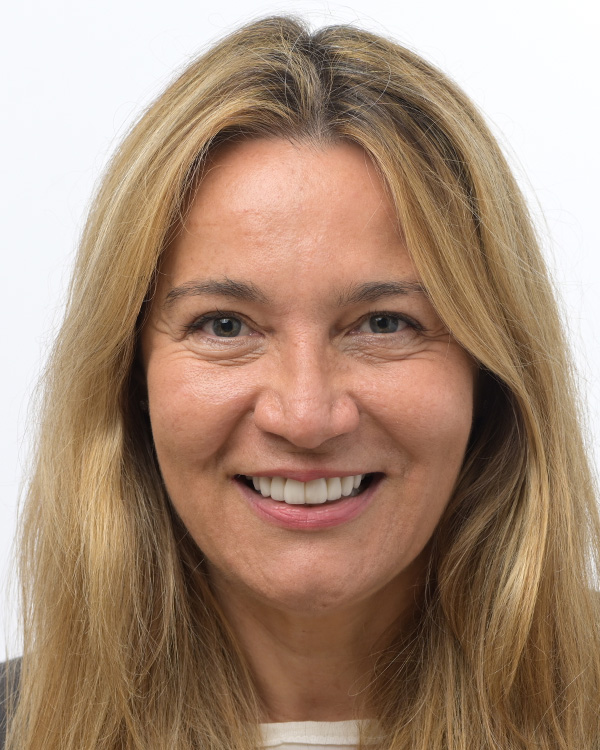
Susana SOLÍS PÉREZ
Policy topics Susana SOLÍS PÉREZ is active on
Carbon Border Adjustment Mechanism (CBAM)Trade relations with ChinaDue diligence in supply chains (environmental and human rights)EU-China relations
What Susana SOLÍS PÉREZ has said (23)
- 2026-01-27 “P-000326/2026 Answer given by Mr Hoekstra on behalf of the European Commission Regulation (EU) 2025/2083 1 introduced the 50 tonnes de minimis threshold as a major simplification measure for the Carbon Border Adjustment Mechanism (CBAM). Its introduction will allow to exempt 90% of importers, mostly small and medium-sized enterprises, from unnecessary compliance costs, while keeping more than 99% of emissions in the scope of CBAM. It should be noted that the introduced de minimis threshold is an annual cumulative threshold which applies to cumulative imports over a calendar year, not to single consignments. Based on customs import data from the surveillance system, the Commission is continuously monitoring the situation to ensure that the de-minimis threshold is not used for circumvention. The risk that the Honourable Member is referring to is therefore being closely monitored. Moreover, the CBAM regulation includes several safeguards: Firstly, the Commission is tasked by the CBAM regulation to carry out an annual assessment, based on the latest trade and emissions data, to check that in the past 12 months, the 50 tonnes threshold allowed to capture more than 99% of emissions. Whenever this is not the case, the threshold will be updated for the following year. Secondly, a review clause foresees that the Commission should assess the robustness of the de minimis threshold by 2027 in a report to the European Parliament and Council. 1 https://eur-lex.europa.eu/eli/reg/2025/2083/oj.”Carbon Border Adjustment Mechanism (CBAM)
- 2025-10-08 “E-003976/2025 Answer given by Mr Šefčovič on behalf of the European Commission The use of hexavalent chromium substances is subject to several complementary pieces of EU legislation, for example, Regulation (EC) No 1907/2006 1 concerning the Registration, Evaluation, Authorisation and Restriction of Chemicals (REACH), and Directive 2004/37/EC 2 on the protection of workers from the risks related to exposure to carcinogens, mutagens or reprotoxic substances at work (CMRD). The Commission has no concrete plans for import restrictions on hexavalent chromiumtreated steel products but is preparing to shift hexavalent chromium substances from authorisation to restriction under REACH. The current phase of this transition process is the development of opinions by the scientific committees of the European Chemicals Agency. The Commission is studying the health and economic impact of a possible revision of the occupational exposure limit for chromium VI compounds under CMRD. Such revision would contribute to workers’ protection, while avoiding excessive burden. The current work is informed by scientific evidence, such as a Risk Assessment Committee of European Chemical Agency Opinion, and subject to stakeholder input. The scope of the planned steel measure proposed on 7 October 2025 3 does not include reciprocity in standards. Its core policy objective is to address the trade-related negative effects of global overcapacity by limiting imports into the EU’s market. Potential actions on standards may need to be addressed through other policy initiatives. Its enforcement date depends on co-legislators, with the current steel safeguards set to expire at the end of June 2026. 1 https://eur-lex.europa.eu/eli/reg/2006/1907/oj/eng. 2 Directive 2004/37/EC https://eur-lex.europa.eu/legal-content/EN/TXT/?uri=CELEX%3A02004L003720240408. 3 https://eur-lex.europa.eu/legal-content/EN/TXT/?uri=celex:52025PC0726.”Carbon Border Adjustment Mechanism (CBAM) · Due diligence in supply chains (environmental and human rights) · Chinese clean tech competition: trade barriers and investment caps vs. open market
- 2025-10-02 “E-003881/2025 Answer given by Mr Šefčovič on behalf of the European Commission The provisional measures on imports of fused alumina were based on preliminary findings indicating the pressing need to address injury caused by Chinese imports to the EU industry, to safeguard its viability, and to support fair competition within the internal market. However, in its provisional Regulation 1 , the Commission acknowledged the legitimate concerns raised by user industries, including the refractories industry, particularly with regard to their ability to absorb or pass on the cost increases and maintain profitability. The investigation is currently ongoing, with the Commission continuing to gather and verify relevant data. All interested parties have been invited to submit comments and request hearings. As part of its assessment of the EU interest, the Commission examines closely the situation of all interested parties, including users of the product under investigation, and is carefully considering all submissions received in line with the applicable procedural framework, in particular those aimed at mitigating the potential impact on users. The objective of the investigation is to restore a level playing field, not to exclude legitimate competition from the market. Investigations are evidence-based and conducted in line with the relevant legislation, ensuring that the instrument is not used to distort competition. Regarding capacity, the Commission provisionally found that the EU industry has been underutilising its production capacity throughout the period considered and has spare capacity that is either available immediately or can become operational within a very short period of time. The Commission is expected to reach a final determination by 16 January 2026. 1 https://eur-lex.europa.eu/legal-content/EN/TXT/?uri=OJ:L_202501456.”Trade relations with China · EU policy on custom fee on non-EU imports
- 2025-07-01 “E-002662/2025 Answer given by Ms Roswall on behalf of the European Commission As announced in the European Water Resilience Strategy 1 , the Commission, in the context of the implementation of the Extended Producer Responsibility (EPR), will carry out an updated study, as also requested by the European Parliament resolution of 7 May 2025 on the European Water Resilience Strategy (2024/2104(INI)) 2 . The Commission would like to reassure the Honourable Members that it is fully aware of the importance to have this study available without delays. At the same time, it is important to provide a study of high quality. In light of these considerations, the study will be made available as soon as possible. 2. The study will cover the costs of the quaternary treatment and the potential impacts of EPR on concerned sectors. 3. The EU Treaties provide that the European Court of Justice (ECJ) can suspend the application of a contested act in certain situations, if an application for annulment is made. The parties concerned can apply for such interim measures to the ECJ. The Commission will respect the prerogatives of the ECJ to decide on such matters. 1 https://commission.europa.eu/topics/environment/water-resilience-strategy_en. 2 https://oeil.secure.europarl.europa.eu/oeil/en/procedure-file?reference=2024/2104(INI).”
- 2025-03-26 “E-001275/2025 Answer given by Executive Vice-President Fitto on behalf of the European Commission 1. Article 49(2) of Regulation (EU) 2021/1060 1 , laying down common provisions for the EU shared management funds, requires managing authorities to publish at least three times a year a timetable of the planned calls for proposals, in either the national website portals or in their respective programme-specific websites. The Spanish authorities have informed the Commission that the setting-up of these websites is delayed, but information of the calls referred to by the Honourable Member can be found in the websites of the bodies of the regional governments that are responsible thereof. The Commission is closely monitoring the situation to ensure the websites referred to in the above-mentioned Article 49(2) are swiftly completed and available to the public. 2. The Spanish Just Transition Fund programme for 2021-2027 was adopted in December 2022 and is still at its first stages of implementation. Accordingly, calls are still under preparation in different regions. The Commission is closely working with the Spanish authorities to provide assistance in accelerating implementation, especially in the context of the monitoring committee of this funding programme, where municipalities are represented. 1 https://eur-lex.europa.eu/eli/reg/2021/1060/oj/eng”Cohesion and rural funding
- 2025-03-17 “E-001119/2025 Answer given by Mr Hoekstra on behalf of the European Commission The Carbon Border Adjustment Mechanism (CBAM) Regulation 1 tasks the Commission with assessing the risk of resource shuffling in biennial review reports as from 2027. Resource shuffling in this context refers to the risk that operators in third countries export their low emission products to the EU, while directing their high emission products to their home market or other third countries with laxer carbon laws. On 19 March 2025, in its Steel and Metals Action Plan 2 , the Commission indicated it will present before the end of the year, and as part of a more general CBAM review, an anti-circumvention strategy. This strategy will carefully assess these risks and propose solutions to address them, including legislative amendments. To deliver on the above, the Commission is conducting a thorough examination of potential risks, focusing on sectors and industries where such practices may be more prevalent. The Commission is aware of the particular situation related to the import of steel goods produced with direct reduced iron and is assessing potential measures. The assessment will inform the development of effective measures to address these risks. The CBAM relies on an actual emissions methodology, with the possibility of also applying default values. This issue will be examined in the context of the abovementioned review. 1 https://eur-lex.europa.eu/eli/reg/2023/956/oj/eng. 2 https://single-market-economy.ec.europa.eu/document/download/7807ca8b-10ce-4ee2-9c11357afe163190_en?filename=Communication%20-%20Steel%20and%20Metals%20Action%20Plan.pdf.”Carbon Border Adjustment Mechanism (CBAM)
- 2025-03-13 “E-001097/2025 Answer given by Mr Jørgensen on behalf of the European Commission A diversified uranium supply is important for enhancing security of supply in the nuclear sector. As per EU Treaties, the Commission cannot take a position on national policies for the use of their natural uranium resources when compliant with the applicable Euratom legislation 1 . The global uranium market is diversified, with many suppliers available 2 . However, the EU currently does not mine uranium in its territory. Given the good level of cooperation with our international partners 3 and the characteristics of the global market, we do not consider there is a significant risk as regards the natural uranium supply to the EU. In line with the recently adopted Roadmap towards ending Russian energy imports 4 and the REPowerEU plan 5 , the Commission is holding regular exchanges with uranium producing countries to secure further alternative sources of uranium. The Euratom Supply Agency has recommended that Member States and market actors should increase indigenous sources of supply. The Commission regularly reviews the list of critical raw materials and assesses any potential gaps. The Commission plans to update the list of critical raw materials by 24 May 2027 6 . The Euratom Supply Agency concludes uranium supply contracts and monitors the nuclear supply market to maintain regular and equitable supply of nuclear materials (ores, source material and special fissile material) for all users in the European Atomic Energy Community 7 . 1 Art.2 let. d) and Chapter 6 of the Euratom Treaty. 2 In 2023, the majority of uranium supplies to the EU came from Canada (33%), Russia (23%) and Kazakhstan (21%). EURATOM Supply Agency - Annual Report 2023, p.13 (https://euratomsupply.ec.europa.eu/document/download/29018562-122c-4818-87742424fc029bf6_en?filename=ESA%20Annual%20Report%202023%20-%20Final%20draft.pdf). Australia and Uzbekistan have also become notable suppliers with 2.55% and 1,9% of import share respectively. 3 e.g. Canada, Australia, and others. 4 https://energy.ec.europa.eu/document/download/d681d15f-ceca-4b20-bcc2b84334a8fc0e_en?filename=Roadmap%20towards%20ending%20Russian%20energy%20imports.pdf. 5 Communication from the Commission to the European Parliament, the European Council, the Council, the European Economic and Social Committee and the Committee of the Regions REPowerEU Plan (SWD(2022) 230 final). 6 Art. 4 of the Critical Raw Materials Act. Available at: Regulation (EU) 2024/1252 of the European Parliament and of the Council of 11 April 2024 establishing a framework for ensuring a secure and sustainable supply of critical raw materials (https://eur-lex.europa.eu/legal-content/EN/TXT/PDF/?uri=OJ:L_202401252). 7 Ch. 6 of the Euratom Treaty and Council Decision of 12 February 2008 establishing Statutes for the Euratom Supply Agency (2008/114/EC, Euratom).”Nuclear energy · EU approach to energy security (home-made vs import sources)
- 2025-02-03 “E-000446/2025 Answer given by Mr Várhelyi on behalf of the European Commission 1. The Commission is in constant and close contact with the competent authorities of the Member States to analyse and manage animal disease outbreaks under the Animal Health Law 1 within the Standing Committee on Plants, Animals, Food and Feed (PAFF Committee) 2 . Relevant Agencies, such as the European Food Safety Authority (EFSA) and the European Centre for Disease Prevention and Control (ECDC), are supporting the Commission and the Member States through targeted Scientific Opinions and Reports on the evolution of the epidemiological situation in relation to several animal diseases. 2. The Commission offers support to competent authorities and stakeholders through training initiatives, such as the Better Training for Safer Food (BTSF) 3 , and the deployment of the EU Veterinary Emergency Team (EUVET) 4 . Furthermore, antigen and vaccine banks for certain animal diseases managed by the Commission are made available to the Member States in case of need. The Commission also performs audits in Member States aimed at monitoring the implementation and enforcement of EU legislation on animal health 5 . Finally, the EU cofunds certain disease control measures performed by the Member States for priority animal diseases through veterinary programmes 6 and emergency measures 7 . 1 Regulation (EU) 2016/429 of the European Parliament and of the Council of 9 March 2016 on transmissible animal diseases and amending and repealing certain acts in the area of animal health (‘Animal Health Law’). 2 https://food.ec.europa.eu/horizontal-topics/committees/paff-committees/animal-health-and-welfare_en 3 https://better-training-for-safer-food.ec.europa.eu/training/ 4 https://food.ec.europa.eu/animals/animal-diseases/veterinary-emergency-team_en 5 https://food.ec.europa.eu/horizontal-topics/official-controls-and-enforcement/health-and-food-audits-andanalysis_en 6 https://food.ec.europa.eu/horizontal-topics/funding-procurement-grants/food-chain-funding/funding-animalhealth-measures/national-veterinary-programmes_en 7 https://food.ec.europa.eu/horizontal-topics/funding-procurement-grants/food-chain-funding/funding-animalhealth-measures/emergency-measures_en”Animal diseases prevention and management in the EU
- “Thank you very much. President. Commissioner. Now we're talking about steel and we're talking about jobs, economic sovereignty and my region, Asturias, where thousands of families live off of steel. And therefore we cannot be disingenuous when it comes to the Chinese overcapacity and unfair trade. We can't ask more regulations, more costs, more constraints, when meanwhile, we have imports that do not respect our energy, environmental or job conditions. That is unacceptable and that is why we are calling on Brussels to address this part of this negotiation. What we're trying here is to throw a lifesaver to our industry to strengthen the duties and to fight any fraud, and it needs to enter into force. Now, the 1st of June. But this will not be enough. The industry steel industry must stay in Europe. For this, we need affordable energy to make sure that the market works appropriately, and a regulatory framework that protects those who create jobs and who invest and who are boosting industry in Europe. Thank you.”Chinese clean tech competition: trade barriers and investment caps vs. open market
- “Thank you very much. The Secretary of State for being here to outline your priorities. You said there's a new cycle in the EU. We've got the Draghi report which says that we need to decarbonize and make it compatible with the economy. We have clear goals. We can't go backwards. But we also need flexibility so that companies can already implement legislation that was passed. You said you'll be focusing on fit for 55. And there's a sector that's asking for flexibility. It's the automotive sector. The electric vehicles aren't coming out as quickly as possible. There's unfair competition. And then there are also potential fines because the car companies won't comply with 2050 goals. So what does the Hungarian presidency think about bringing forward review? A review from 2026 2025 for the. For the electric vehicle sector. So that would include charging points and support to boost demand. And how would you link this up to the Draghi report, which aims to also make the automotive sector more competitive? Thank you.”Road transport environmental policy
- “Thank you very much, Commissioner. I'll be speaking Spanish. Recently, the commission has said that under article 27, Cbam could be suspended temporarily for specific products if it is causing harm on a single market. I was talking about cbam you. I was just saying that the commission can suspend Cbam temporarily if there is specific harm for a specific product on the single market. I'd like to ask you, Commissioner, if you know about the impact of cbam in the aluminium sector, especially in aluminium transformers in Europe, where 200,000 people work in that market, 17,000 in Spain alone, when it comes to the extension to 50 tonnes, which is very necessary for certain sectors for aluminium. This is having, uh, acting as an incentive to buy aluminium outside Europe. Why? Well, because the demand from these plants are below the the limit, the tonnes limit. So people start buying the aluminium outside Europe. Now, as far as I know, you are aware of this problem. And I'd like to ask what are we going to do? Because 200,000 jobs are at risk in Europe because of this. And my second question, part of the automotive package, we haven't heard about vans. This is the means of transportation for many citizens. And in that area, electrification is much slower than for cars. No manufacturer was able to comply with the rules in 2025, for example. We need legal certainty. There are fines that companies are facing. Will the Commission be giving flexibility to vans in particular? For between 2025 and 2027? Thank you.”Carbon Border Adjustment Mechanism (CBAM)
- “Thank you. President. Well, let me begin by sending all our condolences to the families of the miners who passed away in Asturias. The Parliament praised tribute to you today. And thank you, Commissioner Séjourné, for your involvement and also for finally coming up with a plan to protect European steel. It's about time. This is a strategic sector, and it's been calling for solutions to its crisis for too long. In Asturias, as is the case in other areas of Europe, thousands of jobs are at stake because of unfair competition from other countries. The important thing now is to implement the instrument that we have to protect steel. This is now we need to improve the instrument as well. We need to protect steel production and protect ourselves from unfair competition, and take account of the origins of the steel. We also need to work on cbam so that our rules can't be circumvented, and we need to protect our experts. What I'm worried about is that the implementation of many of these measures to reduce energy costs depend on the will of Member States. But nevertheless, this is a good first step, and it needs to be implemented as soon as possible because unfair competition doesn't wait. And external tariffs like Trump's tariffs don't wait either. Europe needs a strong industry, and in order to have that, we need a we need competitive steel industry. Let's act and let's act now. Thank you very much.”Carbon Border Adjustment Mechanism (CBAM)
- “Thank you. Chair, I'm going to speak in Spanish. Um. I'm also an engineer and really enthusiastic about technology. And last year I organized a workshop in the parliament with European fusion startups. And the director general here was here, researchers and other key industry players were there. So there was a lot of extraordinary talent in the room, and there was a lot that could be done. But there was a key warning if we don't have a favorable regulatory framework, if there isn't funding, if there isn't political backing, then a lot of this fusion technology will leave Europe. Fusion isn't just a scientific matter, it's a geopolitical and industrial matter too. The US, the UK, China, all of them are aligning funding and industrial policy and they are setting up the first demonstration plants. So if we want fusion to really contribute to our competitiveness, to climate neutrality and to our strategic autonomy, then we shouldn't just see this as just another research program. We should see it as one of our key industry programs. So I turn to the Director general. How will we ensure that in our fusion program, how will we ensure that there is regulatory clarity, which is what we're asking for? How will we also ensure that we have concrete industrial results. So funding for the first demonstration plants and then we need to have accelerated rollout so that Europe doesn't just lead the way. You know, we don't just want to depend on technology that's developed in other parts of the world, do we? It.”Nuclear energy
- “Commissioner. The clean industrial pact is a good signal that Europe is changing and we're ready for reindustrialization. But I think this comes four years too late, which is why I'd like to stress, first of all, the urgency. It's urgent because its success will depend on how quickly we can apply everything mentioned in this roadmap, and we need to also create incentive for demand. Secondly, we need to act decisively. We need more concrete and effective measures because the Energy Affordable Energy Plan is already not good enough. Investing in networks is only recommendation. And in Spain, closing down nuclear plants, I'm afraid, is not something they will do. Then we need to do this fairly. We need to update all of our trade tools so that they are effective. You know this well because sectors such as steel are not sustainable. Commissioner, we can do this. Europe has historically shown how it can adapt to change and we need to act now.”Energy (green transition)
- “But today we're talking about the future of cars, but also the future of people. People who need a car to go to work or who live in areas where there's no public transport. Today, common sense has prevailed. There will be no ban on the internal combustion engine. This came from the EPP. All these measures will help to reduce emissions. We have electronic vehicles as well as hybrids, which will be allowed to be made after 2035. We're saying yes to decarbonisation, but with flexibility for industry and freedom of choice for citizens. The electric car cannot be a privilege for a few. That's why it's key that today's proposal allows for small cars produced in Europe, in Spain, that supports millions of jobs. And so having a car shouldn't just be for the middle class. This is not a new model. It's a competitiveness and innovation. It's reducing emissions while not destroying jobs. And it's an industry that works for the people.
**Ștefan Mușoiu: Thank you, Madam President. Ladies and gentlemen, the automotive industry package should be seen through the prism of competitiveness. This is a strategic sector which creates an enormous number of jobs and which hasn't yet recovered its production levels from before Covid. The new Green Deal was designed to strengthen the European automotive sector, not weaken it. We need predictable rules for car manufacturers, rules which protect European factories and which enable them to work more flexibly. In the short term. It's possible to achieve this without compromising the EU's climate targets. It's important that we maintain production here in Europe. We support the objective of climate neutrality for 2035, but we do need to adopt a pragmatic and approach and open approach to technology so as to promote European competitiveness. This reset and the new rules are important to prevent pollution, but we have to apply these in a proportional way so as not to endanger jobs or indeed to threaten the mobility of our citizens. Uccessful green transition will enable us to secure jobs in Europe while maintaining the competitiveness of European industry.”Road transport environmental policy · Powertrain choice: EV-only pathway vs. equal support for hybrids, e-fuels, H2 · 2035 ICE phase-out: strict zero-emission target vs. flexibility for carmakers
- “Thank you very much. Present. Ten days after the blackout. We still don't understand the causes, but it was not something that was unpreventable. A lot of experts had already talked about the risk because of a mix of energy, overly dependent on renewables, and the fragility of the system when it came to peaks in demand. We have renewables in Spain. They're not at fault. It is the negligence of energy planning based on ideology and a lack of technical understanding. A nuclear power stations can give security and stability to the system. There has been a lack of investment, of interconnection of storage. The problem is that this could happen again. We have a government that will not take on its responsibilities. And now we hear talk of nationalizing the system. But we need to look at the responsibility of elected. And we need an independent investigation. Thank you.”Nuclear energy
- “Thank you. And the next speaker is Susana Solis. Commissioner, colleagues. Well, this debate is not only about technology, it's about people and avoiding the loss of jobs and industry, because that's what it's about. Selling electric cars in 2035 is not realistic. But, um, we can't backtrack either because there are millions which have been invested. What we're asking the sector is something much more reasonable. They're asking for more time, more flexibility, and to introduce the means to ensure that charging points are accessible prices, access to the network. Because this debate isn't about ideology either, it's about pragmatism and common sense, which means recognizing that all technologies are needed to reduce emissions. We need technological neutrality. And that's very clear when we're talking about vans or the hauliers vehicles, we don't say a lot about those. You can't buy an electric van and there's nowhere to charge them. But first and foremost, this debate is about competitiveness. If we want to make Europe the place where the cars of the future are produced, in other words, or whether we want to leave that to other people. So, um, we need to invest in innovation, in battery production, in reducing, uh, the, the red tape without being afraid of that, so that we can ensure that the next generation of electric cars can have the stamp made in Europe. So you can always count on our group. Mr. Commissioner, listening to this sector, adapting the dates and protecting industry is not backtracking. It's ensuring that Europe is up to it. No compromises. We just need decisions.”Road transport environmental policy · Battery supply chain: EU gigafactory sovereignty vs. reliance on Asian suppliers · 2035 ICE phase-out: strict zero-emission target vs. flexibility for carmakers
- “Thank you, Madam President. Commissioner, this plan for the automotive sector is very welcome. It's a critical juncture. Thousands of jobs are at stake. And it is good news that the commission is finally responding to avoid these huge fines for European producers. Why would you want to hit industry. Now you've obliged them to diversify and would now be giving way to Chinese vehicles. But we need some self-criticism too. Is this enough to for Europe to recover its leadership role? We need to look at autonomous and connected vehicles for the future. Yes, that's important, but it doesn't solve all the problems of the present. The problems for buying vehicles, the infrastructure for charging. We've only got recommendations from member states there. We barely deal with the problem of trucks. Electrifying heavy goods vehicles is not the number one priority. Now, I think we should be more flexible in terms of the objectives. We need to look at the way technology is moving forward. Commissioner. This is a significant step forward, but for the European automotive sector to have a future, we need a strong industry.”Road transport environmental policy
- “Thank you sir. I will be brief. I will speak in Spanish. Commissioner. One of the common questions which businesses have to answer today, along with the local government, is not the design of legislation at the European level, which is really complex, but actually its implementation in practice when this legislation is transposed, because quite often in member states you add additional interpretations. Additional capacities or parallel procedures are maintained. So I'd like to ask the Commission what it will do with specific instruments in order to avoid what we call gold plating, and that fragmentation that occurs at the national level when we implement the omnibus and all of the legislation which you're seeking to simplify. How are we going to guarantee that that simplification, simplification doesn't just remain in the text, but actually results in a reduction in administrative burdens and costs for SMEs, and so that everything's not lost when it comes to applying this at the national level.”EU Single Market harmonisation
- “Thank you. I'll be speaking Spanish. Good morning, Madam Vice President. The clean industrial plan is urgent. Europe needs energy. Clean, yes, but that's affordable and secure to have competitive industry. And as you stated, uh, steel and coal will be a part of Europe. But we need to recognize, of course, the role of nuclear to have a balanced mix. The regulator says that and the commission says that as well. Moreover, you said that we have to learn from the blackout. Therefore, I'd like to know, do you think that it's contradictory that Spain is dismantling nuclear, when in it would be more affordable if we bought than buying gas from Russia, and that that would produce fewer emissions? Moreover, we have to lower our electricity bills and charges and extra levies on energy. But yes, we know that this is in the hands of Member States. But how so? How can you make sure that that is the case and moreover, freeing ourselves up from Russian dependence. And I've been waiting for the answer to my commission answer on uranium extraction. And how will we be able to stop depending on Russia? We have the extraction law in Spain when we have the biggest deposit in Europe. Thank you. The second biggest deposit in Europe.”EU approach to energy security (home-made vs import sources) · Nuclear energy
- “Dear Commissioner, Europe cannot continue to be naive when it comes to China. There is an intention to create an international alliance to strengthen control over rare earths. That is worrying because they are prepared to institutionalize raw material as a geopolitical weapon. If we look at the global processing of rare materials, European businesses are being subject to arbitrary restrictions, confidentiality requirements. And this is a systemic risk for European competitiveness and industry. Temporary suspension of Chinese controls is not sufficient. The message should be clear Europe does not want confrontation with China, but it can also not accept vulnerability. We must diversify when it comes to providers. We must work with trusted partners to speed up European extraction and refinement project, and we must have strategies to ensure that no value chains are taken hostage by arbitrary decisions taken outside our borders. Time presses on.”EU-China relations
- “Thank you very much, Commissioner. You have said that this is a critical point for European climate policy. We need to make sure that our tools are effective, but they also need to be economically and socially viable. And it's fundamental that the cbam functions well and protects European competitiveness. And on that I have a couple of questions. One is on simplification and the exemption for the imports. How is the Commission going to make sure that importing companies do not break? Do not divide themselves up into more companies in order to benefit from that. And then on Cbam as well. I'd like to know what you're going to do to promote exports to third countries and deal with them, for example. Are we talking about free licences for exporters? Are affected. And then on scrap metal, what is the Commission putting forward to make sure that we have enough. Scrap metal available for the European Union to make sure that it's not going outside the EU's borders to countries with laxer standards.”Carbon Border Adjustment Mechanism (CBAM)
- “Thank you very much, Commissioner. My question is also related to this steel industry, which is going through significant crisis. Now I'm over here. Now we're seeing high energy crisis and other issues now. Now the Cbam mechanism needs to be effective. And we are seeing source shifting. So emissions are being shifted to third countries. Producers of steel send a small quantity of steel to Europe. But then they continue producing and causing significant amounts of pollution. What measures are you proposing to prevent this kind of sort shifting and the shifting of emissions and thereby weakening the competitiveness of European steel? How will we help European companies that want to export steel to third countries where the environmental standards are much lower. How can we do that to ensure? How can we ensure that our exports are competitive? Thank you.”Carbon Border Adjustment Mechanism (CBAM)
© EU Matrix · atlas.eumatrix.app · Sign in for the full analysis: scored positions, voting record and engagement.