EU Matrix Atlas › Policymakers
EU Policymakers · ATLAS
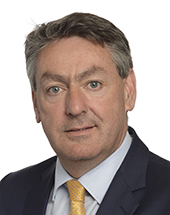
Billy KELLEHER
Policy topics Billy KELLEHER is active on
Digital platforms liability for harmful and illegal contentEU-Russia relations (from March 2022)EU competences on health (internal-competence axis, sharpened)Climate policyEU restrictions on unfair commercial practicesEU law enforcement cooperation in criminal mattersPharmaceuticals regulation in EU — innovation/access axisEU-China relationsEU foreign policy approach
What Billy KELLEHER has said (80)
- 2026-07-16 “(11:13:18 - 11:15:39): Thank you, chair. You are very welcome to the parliament, minister. And your team is also I'm sure you will have lots of work ahead of you, so I wish you all the best. A few pointers, I suppose, most certain questions, minister. They probably have been referenced already, and apologies I wasn't here for your statement, but I was at another committee.
Housing is not a European competency, but yet it is probably 1 of the issues that is going to define Europe in the years ahead as to whether or not we have a cohesive society, whether or not governments and local authorities and those charged with responsibilities across Europe for provide provision of housing either directly as public authorities or else in the provision of housing through the private market through, you know, granting of planning permissions, permitting, etcetera, and investment in in infrastructure to facilitate housing development.
And I know that you're going to have a housing conference, during your presidency, but but I believe that we have to be very proactive, to ensure that our citizens can live, and find affordable accommodation both in terms of rent and purchase. And this is not just exclusively an issue that's challenging, some countries. It is across the entirety of the European Union where we have, huge pressure on certain areas due to, you know, lots of tourists, visiting certain cities, certain areas.
And, I I believe that if we don't do something on this quickly, both at national levels, but also at a European wide level, well, then that fraying of the solidarity across Europe will increase quite dramatically. And this does play into the the politics of Europe as well. And you can see this, you know, it is being used in the context of, tiered housing, blame migrants, you know, pressures on health services, some political groupings blame migrants.
And it is that particular issue that is really becoming quite toxic across Europe and has been fanned, and fanned in this house as well by by by political groupings. And, I just hope that, you know, there's there's a really proactive effort on that, and I want to wish you well. And finally, the equal treatment directive. I know that it is, a long time stalled, but I would really, urge, your presidency to make every effort to try and move that forward again and to get some traction on the equal treatment directive. So.”EU policy on integration and ethnic, racial and religious discrimination
- 2026-07-15 “Thank you very much and to wish you well as you increase the capacity and capabilities of AMLA. I want to wish you and all your staff very much success. The transitional period under the Markets in Crypto Assets Regulation has now come to an end, meaning that firms operating under the new framework must be fully authorized.
At the same time, the international landscape is evolving quite rapidly, as you referenced already, with the United States signaling a more permissive approach to crypto assets. Against this backdrop, it is more important than ever that the EU maintains a coherent and effective supervisory, regulatory framework.
Last year, AMLA identified crypto assets as one of the supervisory priorities and has since issued guidance to national competent authorities on the transition to the new regime. We've also seen the Financial Action Task Force publish its latest report highlighting the money laundering risks associated with crypto assets, particularly stablecoins. Against this backdrop, I have two questions. First, as the MiCA regime becomes fully operational, how will AMLA go beyond issuing guidance to ensure a coordinated supervisory response to high-risk or unauthorized crypto asset service providers seeking to exploit passporting, reverse solicitation, third-country structures, or divergent supervisory practices across member states? Does AMLA have timely access to the information and intelligence needed to identify these risks and coordinate actions? Secondly, Madam Chair, in the future, the AML package will bring some, if not all, CASPs under the direct supervision of AMLA. However, given the methodology for selecting obliged entities for direct AMLA supervision, relatively few crypto asset firms are likely to fall under AMLA's direct remit. Do you consider this division of responsibility to be sufficient from AMLA and CFT perspective, or is there a case for strengthening AMLA's role as a crypto asset service provider action, sorry, as the crypto asset sector grows? Apologies. Thank you.”Anti-money laundering regulation
- 2026-07-13 “(17:49:14 - 17:52:59): time, Kent Minister, 1st and foremost, you're very welcome. And that you highlighted a very ambitious program, and I want to wish you well in in that. We've been advocating for some time in certain key areas and I'm delighted that you have highlighted the the the necessity to address the clinical trials regulation, the medical devices, and obviously the biotech act as well.
I mean, Europe has been a cold place for many years for innovation and research and for clinical trials, and we need to address that very, very quickly, primarily due to the need to make sure that we have a high, tech medicines available, to our citizens, but equally from a geopolitical perspective as well.
To be completely dependent on others for, essentials, is certainly something that's, will be very undesirable. So, I I very much appreciate, the need and the urgency around the clinical trials, as well.
Just an issue that, has brought to our attention, I'm on the FEM committee and we're working on gender inequalities in health care at the moment. And there's an inherent bias minister, in in certain areas, but primarily in health and health care, the education, the academic side of it, and a bias against certain fee cohorts of female populations.
So for example, breastfeeding, menstruation, pregnancy as as well. And in that, it is clearly evident that we don't have a full picture when it comes to assessing medicines for the entire population base. And it is something that, our report is identified very, very obviously that needs to be addressed.
And that means probably regulation, but equally, it also means changing culture, with with academia, clinical trials themselves, and the companies that are engaged in the clinical trials and the development of medicines and therapies.
There's just a secondary as well, minister, that we've a keen interest as well. I'm currently working on the rare diseases action plan, which will be voted on later in this, in the autumn. And the number of people in the European Union with rare diseases is something between 29 and 35000000 people.
And over my lifetime in politics, we've often seen and we've witnessed outside Lindstrom House, from time to time, patient advocacy groups campaigning for medicine to be made available. And surely at this stage, we must do better to make sure that we have the high-tech medicines available as quickly as possible.
And 1 area that I think we should look at is the idea that we have 27 health technology assessments across 27 member states for the same medicine and for the genetically the same people, in my view, makes no sense. And I think that there should be some way of us being able to mutually recognize health technology assessments carried out in 1 member state, which mean for effectively, conferring approval on all member states.
And I just think it's an issue that might be addressed. Otherwise, we have a situation as highlighted earlier by previous speakers where medicines are available to citizens based on your postcode, based on where you live, where you're from.
And, I certainly believe we were to develop a deep union in the issue of health care that's making medicines available, recognizing them through mutual recognition, and then having quick reimbursement to ensure that we complete the cycle of innovative medicines be made available to people, stimulating innovative and creative developments in in medicines and medical devices, and then have closing that that circle to make it efficient and effective both for patients, also for public health, member states and for the pharmaceutical and the medical devices sector as well.”Pharmaceuticals regulation in EU — innovation/access axis
- 2026-07-09 “Fairness and burden sharing should be at the heart of the Common Fisheries Policy. If we were truly to live in a European Union where we try to treat all citizens and all sectors fairly. But, Commissioner, there has been an unfair burden placed on the Irish fishing communities. A 22% decrease in direct gross value added and a 15% drop in numbers employed over the last number of years. We have 12% of the waters. We catch less than 4% of the fish and at the same time, in the North East Atlantic Fisheries Commission, Russia, Norway, Faeroe, Greenland, Iceland and the UK continue to fish in an unsustainable way. Migratory patterns of fish species are changing dramatically due to global warming and temperature rises in seas. And yet there has been no solid review of quota allocation and new quota allocation because of changing fishing patterns. For example, bluefin tuna off the coast of Ireland is now very prevalent, something we would not have seen 50 years ago. So, Commissioner, in doing the evaluation, we also have to look at a review to make sure that we have sustainable fishing in all parts of the European Union, not unsustainable fishing in the north east Atlantic and undermining fishing stocks in Irish waters.”Environmental regulation of fisheries
- 2026-07-08 “(09:17:32 - 09:19:13): I welcome the council conclusion of the 18th and 19th to June on just a few observations, commissioner. 1st and foremost, the commitment to Ukraine. We really appreciate the fact that, the money is now being spent on 2 capacities both in terms of support of the state and on defense as well. But it leads to a very fundamental question about the issue of how we fund the European Union itself. And while we're going to another round of multi annual financial framework discussions and trying to ensure that we have a budget that underpins and supports the values that the European Union, proposes, we have to accept that as it stands, we simply do not have the capacity to do what we must do in terms of supporting Ukraine, paying off the loans that we've taken out previously to support European Union during the COVID crisis, and now also facing into a potential round of enlargement. I am very supportive of the enlargement process, and there's 2 things I believe we have to do, whether we like it or not is 1, institutional reform, and the other area is looking at how do we ensure that we have budgetary capacity in the MFF into the future to facilitate enlargement. It is simply disingenuous of us to continue to say that we will support enlargement. We want to see enlargement. We open the clusters. And yet the most fundamental issue that will be required if we want to continue with the enlargement process is to have the budgetary capacity to do that, to support the incoming member states, and also to ensure that citizens within the European Union as is have the the supports, and funding available to them through the various sectors. So I believe we have to have that big debate, and I hope that it happens over the next”Size of EU budget · EU-Ukraine relations
- 2026-07-07 “(11:38:29 - 11:38:57): Thank you very much, president Metzola. On my own behalf and on behalf of Fianna Fall, I welcome the Taoiseach. As everyone knows, we are close friends, and we have been friends for over 40 years. I wish the Taoiseach all the best as you embark on the presidency. We are facing number numerous challenges in Ireland and in the EU, But I'm sure that you have the skills and the experience to meet these challenges, and I wish you all the very best. Comes at a pivotal moment for the European Union. All of us must decide if we want to take our union to the next level of development. To do so will require all of us, including our country, Ireland, to make some of our red lines a little less red. The EU is imperfect to compromise, but nothing today has come close to being successful in improving the lives of our citizens. We must get real when it comes to the budget, and that means being honest about the level of funding needed to sustain a dynamic, progressive, and ambitious union. We must get real about the threats facing us and invest in our defenses. And finally, we must get real about our values, and never again can we let a 10 pot autocrat hold our union to ransom. Taoiseach, I know you care passionately about the European Union, and I firmly believe that you will be the right person at the right time to meet these challenges head on. You have my full support and that support of the renewed Europe”EU political integration
- 2026-06-15 “At this time last year, there was great uncertainty and volatility, across Europe and great concern, by workers and small and medium sized businesses. And the Turnberry agreement, while not perfect, certainly brought about stability in terms of at least giving confidence to business and work workers that an agreement could be struck whereby we would play by certain rules.
President Trump is volatile. He does make up policy on on the hoof. But from a European's perspective, we have to show that we're committed to signing up what we agreed and implementing it. I'd like to put on the record my deep appreciation to Karen Carlesborough, our renew shadow, for bringing a firm, fair perspective to the negotiations.
And now from now on, the European Union must show a very strong, hand in ensuring that The United States lives up to its obligations under this particular agreement. So now for the moment, it's over to you, president Trump, to honor your words. I will question you on that if you break it. Thank you very much, dear colleague.”EU-US trade relations
- 2026-03-27 “Answer given by Ms Roswall on behalf of the European Commission 8.5.2026 Written question The Commission does not intend to review the expired phase-out dates for the import, export and manufacture of mercury-containing lamps for general lighting purposes. Under Directive 2011/65/EU [1] the placing on the Union market and import of electrical and electronic equipment containing mercury is prohibited, subject to time-limited exemptions listed in Annex III. The exemptions for mercury-containing lamps used for general lighting expired between 2016 and February 2025. Certain exemptions for specific lamp categories, including high-pressure sodium lamps and special-purpose lamps, remain valid until February 2027, and renewal applications are currently under assessment. The revised Regulation (EU) 2024/1849 [2] aligns the regulation (EU) 2017/852 [3] with the Restriction of Hazardous Substances (RoHS) framework. As a result, once a mercury-containing lamp category is no longer permitted on the EU market under RoHS, the corresponding restrictions on manufacture and export apply under the Mercury Regulation. The revision of the Mercury Regulation was supported by an impact assessment [4] , which examined technical, operational and economic aspects, including the feasibility of the measures and their timelines. [1] Directive 2011/65/EU of the European Parliament and of the Council of 8 June 2011 on the restriction of the use of certain hazardous substances in electrical and electronic equipment, OJ L 174, 1.7.2011, p. 88-110. [2] Regulation (EU) 2024/1849 of the European Parliament and of the Council of 13 June 2024 amending Regulation (EU) 2017/852 on mercury as regards dental amalgam and other mercury-added products subject to export, import and manufacturing restrictions (‘Mercury Regulation’), OJ L, 2024/1849, 10.7.2024. [3] Regulation (EU) 2017/852 of the European Parliament and of the Council of 17 May 2017 on mercury, and repealing Regulation (EC) No 1102/2008, OJ L 137, 24.5.2017, pp. 1-21. [4] SWD (2023) 396 final, https://eur-lex.europa.eu/legal-content/EN/ALL/?uri=SWD:2023:396:FIN.”Mercury
- 2026-02-18 “E-000683/2026 Answer given by High Representative/Vice-President Kallas on behalf of the European Commission The EU reiterates its strong opposition to Israel's settlement policy and actions taken in this context, including demolitions, forced displacement and settler violence. Widespread demolitions of Palestinian homes and structures by the Israeli authorities coupled with a rapid expansion of settlements in the occupied West Bank through the advancement of a record number of housing units in the settlements during 2025 and into 2026 are seriously undermining the viability of the two-state solution. As noted in the EU’s position for the 13th EU-Israel Association Council, the EU strongly condemns the demolitions of structures funded by the EU or its Member States and expects that Israel makes good the damage in accordance with international law 1 . Israel has been requested to return or compensate for EU-funded assets on every occasion that it demolished, dismantled or confiscated such assets, including via 12 joint letters addressed to Israeli authorities since 2020 and co-signed by representatives of EU institutions, concerned Member States and other donors. Through these letters, the EU has requested compensation amounting to EUR 1 790 064 for demolished or confiscated property, covering losses recorded between 2015 and 2025. In addition, the EU has reported further losses of EUR 242 335 related to settler violence (2023-2025) and EUR 1 071 113 related to forced abandonment (2024-2025). While the EU continues to use a variety of diplomatic and political channels to enhance its stance and the effectiveness of the overall EU support, Israel has not paid financial compensations for the EU-funded assets it has demolished, dismantled or confiscated. 1 https://www.consilium.europa.eu/en/meetings/international-ministerial-meetings/2025/02/24/.”EU Development & Humanitarian Aid
- 2026-01-15 “Answer given by Mr McGrath on behalf of the European Commission 18.3.2026 Written question The Commission understands that the Honourable Member refers to situation where EU consumers buy goods from non-EU online shops and are requested by the courier firms, that manage the delivery of such goods, to pay VAT and customs duties. Directive 2011/83/EU [1] requires traders (including non-EU traders which target EU consumers) to inform consumers, before concluding the contract, about the total price of the goods inclusive of taxes and fees or, if such charges cannot reasonably be calculated in advance, the fact that they may be payable. Consumers do not have to bear additional charges of which they have not been informed. The directive also provides consumers with the right of withdrawal from online purchases (subject to specific exceptions), without providing any reasons. The consumer can exercise that right also before the delivery and refuse taking physical possession of the goods. Furthermore , Directive 2005/29/EC [2] , which applies also to delivery firms, prohibits misleading and aggressive commercial practices towards consumers. EU consumer protection rules are transposed in national laws and Member States’ competent bodies deal with individual complaints. The Commission is not aware of complaints regarding the problem raised by the Honourable Member. Regulation (EU) 2017/2394 [3] enables national authorities to alert and assist each on suspected consumer law breaches. Comprehensive information on the calculation of customs fees and VAT, and on how this information is communicated to parcel recipients in the EU, is available online [4] . [1] The Consumer Rights Directive — Directive 2011/83/EU of the European Parliament and of the Council of 25 October 2011 on consumer rights, amending Council Directive 93/13/EEC and Directive 1999/44/EC of the European Parliament and of the Council and repealing Council Directive 85/577/EEC and Directive 97/7/EC of the European Parliament and of the Council, OJ L 304, 22.11.2011, pp. 64-88. [2] The Unfair Commercial Practices Directive — Directive 2005/29/EC of the European Parliament and of the Council of 11 May 2005 concerning unfair business-to-consumer commercial practices in the internal market and amending Council Directive 84/450/EEC, Directives 97/7/EC, 98/27/EC and 2002/65/EC of the European Parliament and of the Council and Regulation (EC) No 2006/2004 of the European Parliament and of the Council (‘Unfair Commercial Practices Directive’), OJ L 149, 11.6.2005, pp. 22-39. [3] Regulation (EU) 2017/2394 of the European Parliament and of the Council of 12 December 2017 on cooperation between national authorities responsible for the enforcement of consumer protection laws and repealing Regulation (EC) No 2006/2004 OJ L 345, 27.12.2017, pp. 1-26. [4] https://taxation-customs.ec.europa.eu/buying-goods-online-coming-non-european-union-country_en.”EU competences on consumer protection and product standards · EU restrictions on unfair commercial practices
- 2026-01-13 “Answer given by Mr Šefčovič on behalf of the European Commission 7.4.2026 Written question Products from Israeli settlements located in the territories brought under Israeli administration since June 1967 are not entitled to preferential treatment under the EU-Israel Association Agreement. Since 1 February 2005 a Technical Arrangement requires a proof of origin issued in Israel to indicate the name and postal code of the city, village or industrial zone of origin conferring production. A Notice to importers requires the postal codes on Israeli proofs of origin to be checked against a list of non-eligible locations made available by the European Commission. If the postal code corresponds to a non-eligible location, importers cannot claim preferential treatment. The list, initially published in 2012, is regularly updated to reflect changes in Israel’s postal code system and the expansion of settlements. An integrated Tariff of the European Union TARIC, code Y864, is needed on the import declaration to confirm that the postal code declared corresponds to an eligible location. The Association Agreement provides for administrative cooperation between the customs authorities to verify proofs of origin in case of doubts. The verification is conducted by the exporting party at the request of the importing party. The Commission does not collect systematically detailed information on controls carried out by Member States.”Due diligence in supply chains (environmental and human rights) · Relations with Israel - Palestine
- 2025-10-09 “E-003980/2025 Answer given by Mr Várhelyi on behalf of the European Commission 1. The Commission is currently undertaking a comprehensive evaluation of the Tobacco Products Directive 2014/40/EU 1 and Tobacco Advertising Directive 2003/33/EC 2 . This complex exercise involves considering a broad range of scientific, market and regulatory developments, including the emergence of new tobacco and nicotine products, evolving digital marketing practices and varying national regulatory responses to certain aspects of tobacco and nicotine products. The findings of this evaluation will inform the next steps concerning these two Directives. 2. The evaluation of the Tobacco Products Directive 2014/40/EU and Tobacco Advertising Directive 2003/33/EC is expected to be completed and published in the first half of 2026. 1 http://data.europa.eu/eli/dir/2014/40/oj. 2 http://data.europa.eu/eli/dir/2003/33/oj.”Electronic cigarettes · Heated tobacco products · Smoking regulation
- 2025-09-23 “E-003675/2025 Answer given by Mr Várhelyi on behalf of the European Commission In line with Article 168 of the Treaty on the Functioning of the European Union, the definition of national health policy and the organisation and delivery of health services and medical care is a national competence. Therefore, the responsibility for defining and organising newborn screening falls with Member States. Union action can complement national policies and encourage cooperation between the Member States. For instance, the Commission has funded, via the EU Research & Innovation Framework Programmes Horizon 2020 1 and Horizon Europe 2 , several projects to speed up diagnosis of rare diseases including via newborn screening. Solve-RD 3 and ImmunAID 4 in the past, and currently ERDERA 5 and Screen4Care 6 are prime examples of this EU support. The Screen4Care (2021-2026) project brings together 35 partners, including patients’ representatives, in an international public-private consortium for a total budget of EUR 26 million (of which EUR 12 million of EU contribution). This project aims at shortening the time to rare disease diagnosis by using newborn genetic screening and digital technologies. The project’s outcomes will inform further decisions, at national or EU levels, on how to support newborn screening. 1 https://research-and-innovation.ec.europa.eu/funding/funding-opportunities/funding-programmes-and-opencalls/horizon-2020_en. 2 https://research-and-innovation.ec.europa.eu/funding/funding-opportunities/funding-programmes-and-opencalls/horizon-europe_en. 3 https://cordis.europa.eu/project/id/779257. 4 https://cordis.europa.eu/project/id/779295. 5 https://cordis.europa.eu/project/id/101156595; https://erdera.org/. 6 https://cordis.europa.eu/project/id/101034427; https://www.ihi.europa.eu/projects-results/projectfactsheets/screen4care.”EU competences on health · Public and private sectors role in healthcare services
- 2025-09-16 “E-003561/2025 Answer given by Mr Várhelyi on behalf of the European Commission As announced in President of the Commission’s political guidelines 1 , the Commission will step up its work on preventive health and on treatments for degenerative illness. The Commission supports Member States in preventing and managing non-communicable diseases, such as neurodegenerative diseases. The strategic framework for this support is the ‘Healthier Together’ initiative 2 , under which the Commission provides financial support for joint actions and projects. Through the joint action JADE Health funded with EUR 4.5 million 3 , Member States are working together on the prevention, early detection, treatment and care of dementia and other neurological disorders 4 . The Commission also supports the collection of best practices via the EU Best Practice Portal on Public Health 5 . The best practice ‘Smartaging Mindbrain’ 6 addresses Alzheimer’s disease and other neurodegenerative diseases with a focus on prevention and early diagnosis. Member States are responsible for the organisation and delivery of health services and medical care, including treatment, in line with Article 168 of the Treaty on the Functioning of the EU 7 . The Commission regularly exchanges views with Member States via the Expert Group on Public Health 8 on how to address public health challenges. 1 https://commission.europa.eu/document/download/e6cd4328-673c-4e7a-8683f63ffb2cf648_en?filename=Political%20Guidelines%202024-2029_EN.pdf. 2 https://health.ec.europa.eu/non-communicable-diseases/healthier-together-eu-non-communicable-diseasesinitiative_en. 3 https://health.ec.europa.eu/funding/eu4health-programme-2021-2027-vision-healthier-european-union_en 4 https://jadementia.eu/. 5 https://webgate.ec.europa.eu/dyna/bp-portal/. 6 https://webgate.ec.europa.eu/dyna/bp-portal/best-practice/138. 7 https://eur-lex.europa.eu/eli/treaty/tfeu_2008/art_168/oj/eng. 8 https://health.ec.europa.eu/non-communicable-diseases/expert-group-public-health_en.”EU competences on health · Public and private sectors role in healthcare services
- 2025-04-09 “E-001457/2025 Answer given by Mr McGrath on behalf of the European Commission The definition and application of rules governing the holding of demonstrations and any related sanctions pertain to the Member States. Article 4(2) of the Treaty on European Union underlines that the maintenance of law and order and the safeguarding of internal security in the Member States, including policing laws and the regulation of demonstrations, fall within national competence and consequently outside the scope of EU law. As provided for in its Article 51(1), the Charter of Fundamental Rights likewise applies to Member States only when they are implementing EU law. Therefore, it is for Member States to ensure that fundamental rights are effectively respected and protected in the context of demonstrations, in accordance with their national legislation and international human rights obligations. Member States may restrict the freedom of movement of EU citizens on grounds of public policy or public security 1 . This includes the possibility to expel a beneficiary of the right of free movement, while complying with the requirements and procedural safeguards set out under EU law 2 . Restrictive measures may be taken where the personal conduct of an individual represents a genuine, present and sufficiently serious threat to one of the fundamental interests of the society of the host Member State. Decisions must be proportionate. The persons concerned must be informed of the reasons for the decision and must have access to redress procedures at national level 3 . National courts are competent for assessing whether a specific measure is justified and proportionate and whether the relevant procedural safeguards have been complied with. 1 See Chapter VI of Directive 2004/38/EC of the European Parliament and of the Council of 29 April 2004 on the right of citizens of the Union and their family members to move and reside freely within the territory of the Member States amending Regulation (EEC) No 1612/68 and repealing Directives 64/221/EEC, 68/360/EEC, 72/194/EEC, 73/148/EEC, 75/34/EEC, 75/35/EEC, 90/364/EEC, 90/365/EEC and 93/96/EEC, OJ L 158, 30.4.2004, p. 77–123. 2 Articles 30 to 33 of Directive 2004/38/EC. 3 Articles 30 and 31 of Directive 2004/38/EC.”EU policy on integration and ethnic, racial and religious discrimination · Disinformation & online freedoms
- 2025-03-19 “E-001171/2025 Answer given by Ms Roswall on behalf of the European Commission The provisional agreement on the targeted revision of the Waste Framework Directive (WFD) 1 reached on 18 February 2025 amends the Commission proposal by modifying recital 40 and Article 22c(4) and including new Article 22c(3a). The revised provisions aim to allow Member States to address ultra-fast fashion and fast-fashion practices via the modulation of the Extended Producer Responsibility (EPR) 2 financial contributions. Recital 40 explains the importance of addressing ultra-fast fashion and fast-fashion practices when modulating the EPR financial contributions and provides examples of potential criteria that Member States may consider for such purpose. Those criteria serve the purpose of exemplifying the producers’ practices referred to in Article 22c(3a). According to Article 22c(4), to avoid distortion of the internal market and ensure a consistent modulation of EPR financial contributions based on Ecodesign for Sustainable Products Regulation (ESPR) 3 requirements and on the producers’ practices mentioned in Article 22c(3a), the Commission intends to adopt Implementing Acts laying down specific fee modulation criteria. After the adoption of the ESPR Delegated Acts, the ESPR sustainability criteria will be set and the Commission will be able to develop the EPR fee modulation criteria and adopt the WFD’s Implementing Acts. The preparatory work for the drafting of the ESPR Delegated Acts is ongoing. It is therefore too early to provide clear indications as to how the Commission is envisaging the alignment of the WFD Implementing Acts with the ESPR Delegated Acts. The adoption of the Implementing Acts will follow the Committee Procedures as described in Article 39(2) of the WFD and the Better Regulation Guidelines 4 . 1 Directive 2008/98/EC of the European Parliament and of the Council of 19 November 2008 on waste and repealing certain Directives, OJ L 312, 22.11.2008, p. 3–30, as amended by Directive (EU) 2018/851 of the European Parliament and of the Council of 30 May, OJ L 150, 14.6.2018, p. 109–140. 2 https://environment.ec.europa.eu/topics/waste-and-recycling/waste-framework-directive_en 3 Regulation (EU) 2024/1781 of the European Parliament and of the Council of 13 June 2024 establishing a framework for the setting of ecodesign requirements for sustainable products, amending Directive (EU) 2020/1828 and Regulation (EU) 2023/1542 and repealing Directive 2009/125/EC. 4 https://commission.europa.eu/law/law-making-process/better-regulation/better-regulation-guidelines-andtoolbox_en”Sustainable fashion · Circular economy
- 2025-01-22 “E-000268/2025 Answer given by Ms Albuquerque on behalf of the European Commission Effective supervision is essential to fostering trust in the single market and protecting policyholders. Under the current EU supervisory framework in the insurance sector, national authorities bear primary responsibility for overseeing insurance undertakings and intermediaries within their jurisdiction, ensuring compliance, and taking corrective action when necessary. Their mandates are clearly defined under the Solvency II 1 and Insurance Distribution 2 Directives, which require them to operate independently. Within this framework, the European Insurance and Occupational Pensions Authority (EIOPA) plays an important role in ensuring high-quality supervision and promoting supervisory convergence across Member States. The recently adopted Solvency II review 3 adds stronger cooperation and more automatic information exchange in case of significant cross-border business between the home and host supervisors and enhances EIOPA’s powers to intervene in complex cross-border cases, including binding mediation 4 . EIOPA, as an independent authority, supports the European Parliament, the Council, and the Commission in the development of legislation within the area of insurance and occupational pensions, while being accountable to the European Parliament and the Council. The Commission is committed to improving the supervisory system at the EU level, as outlined in the mission letter to the Commissioner for Financial Services and the Savings and Investments Union. However, it is important to emphasize that only the co-legislators have the mandate to change the scope of EIOPA’s supervisory powers in the EIOPA Regulation 5 and sectoral legislation. 1 Directive 2009/138/EC of the European Parliament and of the Council of 25 November 2009 on the taking-up and pursuit of the business of Insurance and Reinsurance, OJ L 335, 17.12.2009, p. 1–155. 2 Directive (EU) 2016/97 of the European Parliament and of the Council of 20 January 2016 on insurance distribution, OJ L 26, 2.2.2016, p. 19–59. 3 Directive (EU) 2025/2 of the European Parliament and of the Council of 27 November 2024 amending Directive 2009/138/EC as regards proportionality, quality of supervision, reporting, long-term guarantee measures, macro-prudential tools, sustainability risks and group and cross-border supervision, and amending Directives 2002/87/EC and 2013/34/EU, OJ L, 2025/2, 8.1.2025. The directive will apply as of 30 January 2027. 4 See Articles 33, 152aa, 152ab, 152b, 155, 158, 227, 231, 238. 5 Regulation (EU) No 1094/2010 of the European Parliament and of the Council of 24 November 2010 establishing a European Supervisory Authority (European Insurance and Occupational Pensions Authority), amending Decision No 716/2009/EC and repealing Commission Decision 2009/79/EC.”Financial regulation
- “Thank you very much. The ICC was established by a statute of Rome. It is the last court. It's the court of last resort to uphold international law. And the credibility of the international community is at stake. But from a European perspective, our credibility is at stake. If we are to stand by the rule of law or stand by our principles on which this particular institution and the other institutions of the EU are founded on upholding law and the rule of law. Well, then, the very least we should do is first and foremost condemn the sanctions placed on the ICC members, but more importantly, bring forward the blocking statute to address some of the personal concerns for the individuals that have been sanctioned, but more importantly.”Support for International Criminal Court
- “Well, first and foremost, just thank you for your contributions, and I suppose just acknowledgment that the report is published and that you intend to bring forward amendments. Look, I try to be as inclusive as possible, but I think there's also obligations on us to ensure that the report is defined and that it gives direction to policy makers. So we want to make sure that it is clear and concise from the perspective of ensuring that we have gender specific conditions itemized, and that we make recommendations on same as well. Um, clearly, if you look at the statistics and the empirical evidence, there is no disputing the fact that we have gender inequality difficulties in the health services. They're systemic. Um, they're there because of culture. They're there for many reasons. It has been male centric for centuries in terms of healthcare policy making and delivery, in terms of clinicians as well. So that is an area that is quite systemic and has to be addressed. But the report, um, I tried to ensure that we included as much as was possible, but there is conditions on the amount of words that we can publish in the initial draft report.”Gender roles, equality and inclusion
- “Firstly, Commissioner, I would like to thank you for visiting Ireland recently and meeting with stakeholders and particularly fishers in the West of Ireland and Castletownbere. I appreciate it and I know they appreciate the engagement as well. At the outset, the lawless, the lawless exploitation and abuse of our oceans has to stop and I hope that the European Oceans Pact is a policy that will bring about that change in mindset. From my perspective, when we talk about sustainable fishing, we have to address a very fundamental issue, Commissioner, and that is the fact that supertrawlers are across the planet, are industrial scale fishing and exploiting stocks beyond sustainable capacities. So I believe that if we are to have a review of the common fisheries policies that we have to look at the fact that we are overfishing in many areas, and that has predominantly been done by super trawlers, as opposed to the smaller trawlers and coastal community fishers that are taking sustainable stocks from our seas. So any re-evaluation of and review of the Common Fisheries Policy must look at sustainable coastal communities supporting our fishers, but certainly addressing the issue of the massive exploitation of fishing stocks across the globe and in European waters by super trawlers. Thank you very much, Commissioner.”Environmental regulation of fisheries
- “Nobody will shed tears for the theocracy and brutal dictatorship that is the Iranian regime. And we sincerely hope that it would fall immediately and that the people of Iran would be able to decide its future. But we are at a crossroads here in terms of a number of things from the European perspective. First and foremost, are we going to acquiesce to the abandonment of multilateralism and international rules based order, because we are a rules based order here in the European Union, and we claim to live by the UN charter and international law. It is clearly evident that what is happening in the Middle East is not within the confines of the UN charter. So at least be honest with ourselves. We either are going to accept the international rules based order and defend it, or else we are going to abandon it. The President Trump has acted unilaterally on a number of occasions from the point of view of the European Union. We have had a situation with regard to an attack on the sovereignty of a member state in terms of Denmark. We have had a situation where we have had on off support for Ukraine from President Trump. This is a war that's at our front in the Eastern Front, and simply, we are the ones that will be faced with either the success or failure of Ukraine. And equally, in the context of the Middle East, it will be Europe that will be the ones that will be most likely affected. We've already seen an attack on Cyprus itself, the displacement of people. If the displacement of people starts from the Middle East, they will end up in Europe. And these are the real questions that we have to ask ourselves when we are talking about the UN charter, multilateralism and the respect for international law. Clearly, I believe that this particular war in the Middle East is not within those confines.”EU foreign policy approach
- “And but more importantly, the the International Criminal Court deals with international crimes, crimes against humanity, genocide, crimes of aggression and war crimes. And the reasons these sanctions were placed were stated by President Trump himself when he signed the the sanctions itself, when he said it is an attack on the US and on Israel. Now, by any credible stretch of the imagination, what the ICC is doing is holding Israel to account. And many other actors as well, that have been involved in genocide, in war crimes in the Middle East. And that includes leaders of Hamas as well. So they have been impartial in addressing those particular issues. It is a shameful act and we should deal with it very quickly.”Support for International Criminal Court
- “In Ireland, for example, we have a situation where we cannot fish certain species of fish from the shores with a rod and a hook and at the same time, super trawlers five miles from where the beach meets the water. They can fish what they like, and there is no capacity to inspect them or to ensure that they are complying with the basics with regard to the obligations we put on Irish fishers and European fishers, and if we are to be truly honest to ourselves, we can't have a situation where third countries can effectively fish with impunity and destroy our biodiversity in European waters, and no sanctions or no fears. So I very much welcome this report. But I hope when we talk about biodiversity, we look at it in the context of the Common Fisheries Policy and ensure that those that are outside of the European jurisdiction must comply with the basic laws of the sea and the conservation that we oblige Irish fishers and European fishers to comply with.”Environmental regulation of fisheries
- “I welcome the outcome of the Hamburg Declaration and the signing by the. The countries in the precincts of the North Sea and Ireland was a signatory to that declaration as well. It's quite ambitious, Commissioner. 300gw by 2050 from wind energy in the North Sea area. And from my perspective, it means that we not only have to announce and outline what we're going to do, but we have to follow through. With regard to timelines and the monitoring of member States. Clearly this is not just about transitioning. It's also about making Europe resilient, less reliant on fossil fuels from, you know, the areas that we can no longer geopolitically depend on. But more importantly, we need to get competitive. And to be competitive, we have to have cheaper electricity for our industries and equally for our homes as well. So while we welcome this, we have to ensure that there is a strong monitoring from an Irish perspective. We still have significant challenges in the area of planning and permitting, and also we need greater connectivity to the UK and then obviously into the European Union itself as well. So we would appreciate those commitments in the in the Hamburg declaration.”Off-shore renewables
- “Mr. president, at the outset, I welcome the statement by the president of the Council and the president of the Commission regarding the fact that we are determined to insist on international rules based order, multilateralism and the UN charter, and ensuring that Europe plays its part in being a reliable partner in that context and in that architecture. Reference has been made to Ukraine, and we have to ensure that we support Ukraine, both the European Union, NATO and its allies to insist that the integrity and the sovereignty of Ukraine is protected and that means continual financial support, as was announced with the 90 billion Common European loan for Ukraine. But if we are to be genuine about international rules based order, it cannot be a la carte. We have to insist on international rules based order in every conflict, in every aspect of life. And that means we have to insist on international rules based order in Gaza as well. And we have to insist that Israel complies with international law when we are dealing with Gaza. President, I find it very hard to listen to people in this chamber, particularly from the far right, advocating for President Trump when President Trump is using the wine producers in Italy and in France as leverage to beat us. When President Trump is using the car factory workers in Munich, in Slovakia and in other countries right across the European Union, when he's using their jobs as a battering ram to threaten us, it is incomprehensible that you could be supporting a president of the United States who wants to undermine everything we are trying to achieve in the European Union. And if you don't believe me, just go to President Trump's US national security strategy and scroll down to see where he says promoting European greatness, and then takes a sledgehammer to everything that we stand for here in this European Union. It is quite shameful and hard to understand. So again, I say, go back to your constituents, go back to your voters and tell them that it's your icon. It is your hero that are threatening their jobs.”Foreign interference in Europe
- “Mr. president, I welcome the publication of the work programme for 2026. I also welcome many of the aspects that are included from the new grouping. You speak about competitiveness, cost of living, jobs, growth and investment, and research and innovation. Of course, the most fundamental issue that we need to address is the harmonisation and the deepening of the single market, coupled with the 28 regime and bringing forward the Savings and Investment Union. And if we do not achieve those things, we undermine all that we are trying to do in the context of this work programme, but more broadly so over the next number of months. My grouping will play its part in ensuring that the work programme can move forward with speed, to react to the issues that you have outlined as being very serious. Draghi has been mentioned. Of course, Draghi is the Bible across Europe at the moment, but we do need to accept that there are many things in Draghi that need to be done quickly. And most fundamentally, the only way we can untap the single market and the private market is by bringing forward that savings and investment union. I hope that you put strong emphasis on on that particular project. Just on an issue that is political. President von der Leyen, the people in this chamber that are primarily supportive of this work programme sit from here to here, and it doesn't always work, and you have an obligation to ensure that the platform does work and that we try and work from the centre out on the policies that you've outlined in your programme. Otherwise, you will have significant challenges in this chamber in trying to get through a work programme that is critical to the citizens of Europe. So I do hope that strong emphasis will be put on the platform in ensuring that this programme goes ahead smoothly. Thank you.”EU Single Market harmonisation
- “And for our own initiative report. And just to say, that year after year, we stand at this podium and deplore the gender pay gap. And whilst it is narrowing, the progress is far too slow. The World Economic Forum has estimated that it could take over a century to close the global gender gap. One of the most worrying factors for me is the pay gap is evident at the very beginning of a woman's career. A recent study in Ireland has shown that a 25 year old man earns, on average, €50 more per week than his female counterpart. I think these figures show to serve the differences cannot be explained away by differences in experience or the impacts of career breaks. They show that the inequalities are ingrained in the system and must be rooted out. These inequalities are compounded over the decades. In 2025, the average pay rise for men in Ireland was 6.5%, compared to 5.4% for women. Continuously repeated over a career of several decades, then eventually this amounts to even a greater pension gap of 25% in the EU and a huge 31% in Ireland. It is very sad, though, that we still have a situation where we are inciting this Parliament, consistently, negotiating a women's rights and begging the right to be more understanding of the need to ensure that we have equality. I do want to say to the centre in this House that we have an obligation to ensure that we do not play with equality from over there, and we stand firm on the issue of equality from the centre out rather than from the right over there. Thank you.”Gender pay transparency
- “I very much welcome the announcement of the European Democracy Shield and the EU strategy for civil society. We have to protect our societies and as importantly, as our democracies. They are intertwined, but our minds and our freedoms cannot be for sale to the highest bidders. And in that context, I really urge the Commission to continually support and underpin the DSA to ensure that it is not unravelled or intertwined in trade agreements. We simply cannot have a situation where our DSA is decided by others, rather than the democratic institutions that put it in place in the European Union. I am really concerned at some of the tone of the debate in this particular House, the way they dismiss Russian interference and interference in elections from outside the European Union. We simply must protect our democracies. And from that perspective, Putin, having any say in the context of democracy in the European Union must be defended at all times. So, Commissioner, I urge you to ensure that the European Centre for Democratic Resilience and in particular the foreign information manipulation and interference and disinformation is taken seriously both in the context of Russia but also of other actors who are willing to undermine our democracies as well.”Disinformation & online freedoms
- “Indeed, regime for European companies could be a real catalyst for boosting competitiveness, strengthening the single market and reducing fragmentation in the EU. It could create the right conditions for the next generation of high growth companies to stay in Europe, to start up, to innovate and to scale up, rather than seeking growth abroad. Just last week, the Financial Times reported that trade between member states had dropped for the first time in a decade. This regime could reduce the complexities and encourage more companies to look outside their own domestic markets. The 28 regime is an opportunity, so let's not waste it. Let us not over legislate and overcomplicate for something to make sure it works perfectly in theory, but for it to work in practice, this regime needs to be simple, have added value and most importantly, it needs to be attractive. I strongly support Parliament's recommendations to the Commission to keep this proposal targeted and avoid areas that fall under national competences such as taxation, insolvency and employment law. Instead, the proposal should focus on having a broad scope, ensuring it is a voluntary opt in regime, complemented 27 and embedding First digital and the once only approach. I look forward to the publication by Commissioner McGrath bringing forward this proposal in March.”EU Single Market harmonisation
- “Since President Trump unilateral attack on the Iranian regime, it is clear that we can no longer let our citizens be held ransom by countries that can withhold fossil fuels from us. The choice is clear. Will we do what is necessary to wean ourselves off fossil fuels and finally break the link between conflicts in one part of the world, affecting the day to day lives of European citizens, households, SMEs, farmers and industry are all suffering. Energy prices have been abnormally high for over four years, pushing up fertiliser, food prices and the cost of doing business, and this results in reduced living standards. We must double down on renewables and especially in Ireland's case, offshore wind, solar and biogas. We must end the taboo in certain member states, including my own, about the potential for nuclear energy. Yes, there are many challenges with moving to renewables. We are too slow at permitting, too slow at building. But the alternative is to allow the Ayatollah Putin or President Trump control our shared futures. Only when our economies are powered by secure, carbon free electricity will we be able to stop worrying about the whims and actions of dictators and unreliable partners, the conflicts they entangle the world in, and the damage they can do to our living standards?”EU approach to energy security (home-made vs import sources)
- “President von der Leyen said that the EU had the strength to negotiate and the power to push back. And those are the two things that we must do. We must negotiate and continue to have dialogue. But equally, the European Union is obligated to ensure that it acts strategically in terms of potential tariffs that may be placed on European goods tomorrow, which is called Liberation Day by President Trump. But may I say from the outset, it is critically important that when we are looking at tariffs and when we are looking at retaliatory measures, that we do it strategically and without emotion, that we look at it from the point of view of the impact that it will have collectively across Europe. But equally, we have to look at it from a member state perspective and ensuring that countries that are specifically dependent on certain sectors are not harshly punished by decisions of the EU collectively. And for that, I welcome the fact that president von der Leyen has said she has been in discussions with the heads of state and heads of government across Europe to try and come up with a strategy to ensure that we can retaliate, but also in a way that does not damage member states and certain sectors of industry in member states itself. From an Irish perspective, we clearly want to maintain that unity of purpose of the European Union. But in doing that, we must ensure that we look at every country and the dependence that they may have on specific sectors. When we are making decisions on behalf of the European Union.”EU-US trade relations
- “I also reiterate the call on the Commission to act on the clear mandate expressed by this House in the report of the European Citizens Initiative. My voice, my choice. Finally, the the report addresses funding as. Let's be honest, funding is a powerful lever for change. I have stressed the need for gender mainstreaming in the EU budget, and I think we should also explore the need for dedicated funding calls for gender specific conditions in the research space. We need to close the gap in sex specific health data. This is not only necessary to address the systemic inequalities in healthcare, but also consider it a competitive opportunity for the EU. This data would offer a solid basis for further innovation in Europe. In conclusion, I look forward to working with colleagues to produce a meaningful, targeted report with clear asks of the Commission, the Member States and the health professionals. Initially, this report was plagued by discussions of competences, but frankly, we need to put these aside and think about producing something that speaks to our citizens. This report has to be a symbol of how seriously this House takes the issues of inequalities in health, and our motivation and ambition to address these. Thank you very much.”Gender roles, equality and inclusion
- “Thank you very much. Firstly, just to thank the rapporteur and his office for their professionalism In our initial discussions, and to say that this is a sound basis for further negotiations. The discussion on tax, especially tax fragmentation, often sparks a heavy handed reaction when it seeks to harm because it seeks to harmonise everything. And of course, we have to take into account that the very different um, systems that we have in member state competences. I appreciate and I commend the approach the rapporteur has taken so far, which is more nuanced, respecting member States whilst trying to identify obstacles for business which are a hindrance to European competitiveness. My approach to the amendments will be to look for workable solutions that are business friendly. Moreover, I will focus on both improving the single market and taking a global view to ensure that the EU remains competitive competitive vis a vis its international competitors. In particular, there are a number of areas I would like to expand on in my amendments. Firstly, the VAT gap. The VAT compliance gap is costing the EU tens of billions each year in some member states. It is as high as 30% of the take itself. So this is a significant issue and a large loss of revenue at a time when member states purses are stretched thin. We need to find simple ways of collecting what is due. Regarding the digitization of returns and ensuring interoperability. When we think of simplification, we often the proposed solution is digitization. There is huge potential for the digitization of tax administration, but it will only be beneficial if we have the skills in place, the user friendly and efficient, and as far as possible, digital systems are interoperable both with other tax authorities and with the private sector as well. There needs to be complementary efforts there to ensure that private sector can operate with the state systems.”VAT harmonisation
- “Yes, sir. I welcome the publication of the Action Plan for Affordable Energy and, of course, affordable energy. And energy in the context of security is vital for the development of the European economy. To give certainty in terms of investment. But equally and importantly, we have to address a very fundamental issue around our competitiveness, the cost to businesses and the cost to families and households right across Europe. And reference has been made to affordability. Of course, affordability varies greatly across the European Union itself. I would like to see greater investment in the generation capacities and in the harnessing capacities, particularly in the area of solar and wind. And we do need a euro grid commissioner whereby we can transport electricity from where it is produced to where it is needed, and they will be significant challenges from an Irish perspective. Of course, we are an island nation. We have great potential in terms of wind energy, but we need to have the capacity to export it through interconnectors via France directly and also via the UK as well. These would be significant costs and challenges, but they need to be done to advance our wind energy capacity.”EU energy infrastructure integration
- “Thank you very much, chair. I welcome the report, and I suppose the discussion that will emanate from it in terms of the Marine Strategy Framework Directive. And of course, what we do on land, um, you know, has a major impact on the quality of water in our seas and our rivers, and we should be very conscious of that when we are discussing and ensuring water resilience and protecting, um, our seas in particular. But I just want to reference when you look at this particular report and when you also read the articles of it underpinning it, it speaks about the Common Fisheries Policy, including the future reform should take into account the environmental impacts of fishing and the objectives of this directive earlier in point 18. It also references the need for, um, you know, countries to establish the obligation for member states to designate Natura 2000 sites under the Birds Directive and the Habitats Directive will make an important contribution to this process. And I welcome all of that. But I have a significant difficulty in understanding the stated aims of this particular report, the stated aims and many others. And the fact that we allow overfishing by third countries with super trawlers in European waters. It is beyond belief that we are trying to protect and encourage and cultivate biodiversity, and at the same time we have trawlers of enormous proportions, fishing in European waters, where they are effectively destroying any chance of proper biodiversity and undermining fish stocks.”Nature protection and restoration in the EU
- “I welcome the publication of the EU Clean Industrial Deal. And just to say at the outset, I want to wish you well, Commissioner, in this particular endeavor. And it is critically important that we do use decarbonisation as a growth pathway to ensure that Europe becomes competitive. But this is just one specific area I want to hone in on, and that is the issue of sustainable aviation fuel. Um, aviation accounts for about 4% of our EU emissions. And if you look at it in the context of the transport sector, that would be about 14% of transport emissions inside the European Union, yet at the same time, sustainable aviation fuel and reference to it in the clean industrial deal is very light to say the least. So I really hope that there would be policies put in place to incentivise and encourage not only the innovation but the production scale up aspect of it as well. Because there is demand, there is demand for sustainable aviation fuel. The problem is there is no supply and we do have to incentivize supply and encourage supply. So we need policies underpinning that because it will require huge capital investment. But more importantly, if there is certainty in policy then I am quite sure the aviation sector would embrace it.”Decarbonisation of aviation sector
- “Thank you very much. I welcome the publication and presentation of the European Affordable Housing Plan. And just to say at the outset, Commissioner, we have to succeed in this. At the moment, across most of Europe, we have a housing crisis. It's fracturing society, undermining social cohesion and harmony and undermining intergenerational solidarity. And we are now in a situation where we're in a demographic spiral as well, where people simply can't get involved in family formation. They are delaying that, and that is putting huge pressure on our demographics. Across Europe, social and affordable housing is a key area, and the lifting of state aid rules to ensure that states can invest directly in housing is a critically important component. From my perspective in Ireland, one of the significant challenges we have is our inability to go through the planning and permitting system, not only directly for houses themselves, but for the infrastructure that is required to underpin them water, roads and waste as well, and electricity. So clearly, from the planning and permitting perspective, Commissioner, I would urge that you use everything possible to benchmark across the entirety of the European Union the speed at which planning and permitting are granted, and that they can flow through the process in a seamless way so that we can start building houses very much.”EU housing policy
- “And I know that we've had long debates on this particular issue, but at least we've come to a conclusion now in Europe. We do need to ensure that, um, regulatory data protection, intellectual property rights are protected, um, to incentivise companies in the whole area of research and development, from the clinical perspective as well. I think the European reference networks are functioning. Um, I know that a lot of countries still have the obsession with oversight from a national perspective, but I believe that we have to start moving to a more integrated European Union in terms of, uh, medicinal, um, efficacy. Um, in terms of, uh, you know, assessing medicines for their efficiency and efficacy and that we would have more centralised system in doing that. And then ultimately the issue of reimbursement, which is a very difficult one for us to discuss as, um, in my own group and more broadly, um, within the various political groups across the European Parliament. But we have to get to a stage where there's actually efficiencies in reimbursement of medicines. So I just think that's a key area as well. That should also be discussed when we're talking about rare diseases. Thank you very much.”Pharma IPRs
- “Although EU legislation requires justification for excluding certain groups from clinical trials, women remain underrepresented in trials, and pregnant and breastfeeding women are almost entirely excluded. Less than 0.4% of clinical trials in the EU include pregnant women, even before trials begin. Diversity is often absent, with animal testing still overwhelmingly conducted on male subjects only. Without inclusive research, safe and effective treatment simply cannot follow The reporter for calls for stronger measures to improve diversity in trials and for the adoption of clear guidelines on the inclusion of pregnant women and other marginalized groups. Importantly, the report also calls for mandatory sex disaggregated data in all EU funded research. From all the input that we have received from a broad range of stakeholders. The call for aggregated data from a common theme across it all. The report then addresses diagnostics and treatment where historic bias has become embedded in everyday medical practice. For example, cardiovascular disease, the leading cause of death among women in the EU, is still frequently misdiagnosed because women symptoms are typically labelled atypical. The report therefore calls for member states, alongside the medical profession and educational institutions, to integrate gender sensitive healthcare training into the medical curriculum and to launch pilot programmes. I really want to stress that any changes to bedside procedures must be informed by real life patients experience.”Gender roles, equality and inclusion
- “For the last ten years, the interest rates on an Irish mortgage have been continuously higher than the EU average and at some times double that average. Likewise, in SMEs, seeking a loan in Ireland has to pay considerably more than an SME on the continent. And Commissioner, there are a few significant barriers that are of national competence, but equally also with regard to risk weighting of assets. That is causing significant challenges for Irish banks in their obligations to retain additional capital. Because of legacy issues from the financial crisis of 2008 to 2010. And if you look at the banks balance sheets and their lending books, you know they are well capitalised. They have reduced their risks. Bad loans are quite reduced, but yet at the same time, we are consistently risk weighted at the highest level, forcing Irish banks to retain additional capital and then putting further costs on them when it comes to lending. So I would urge the context of the Commission evaluating the banking sector's competitiveness and producing a report by 2026 that they would also look at these particular impediments to ensure that we open up the market competitively with the banking union, but also that we remove obstacles to banks lending in Ireland as well. Thank you Commissioner.”European Banking Union
- “Firstly, I would like to thank. The author of the report, Michalis Pantelia, personally and professionally and his office as well, and I really appreciate the work that was put into this. We keep saying that to make Europe more competitive, we need to re-energise our European companies and the single market. But the companies I speak to in my constituency have boundless energy. However, they need to spend a lot of it on navigating complex regulation or overcoming regulatory hurdles. We also say that we need to motivate our companies to invest and grow, but the companies I speak to are not lacking in motivation. The issues that they need to plow through a lot of their money in compliance costs. In fact, a European Commission study found that the annual tax compliance bill for companies in the EU and the UK stands at around 200 billion, and a disproportionate amount of this falls on our small and medium sized enterprises. I fully support this report on simplifying tax rules and addressing tax fragmentation. In this report, we take a very practical and feasible approach to simplifying the framework. Too often, this House immediately jumps to harmonisation as the solution to problems, but such an approach gets stuck in the weeds of politics in Council and Parliament, and there is no benefit to European companies. Instead, this report focuses on practical changes that can be made in the short term to ease the day to day processes of doing business. We need to streamline the framework and ensure certainty and predictability so our businesses can be confident in making decisions in the future. We need to improve the efficiency of tax administration and digitize where possible. And there should be a level. There should be a level of continuity amongst the interfaces of the different tax authorities. So when a company in Ireland engages with the authority in France, for example, there is a familiarity. So I want to commend the report and again thank the author and hope that we act upon it.”Overall simplification of regulation in the EU
- “Commissioner, I have to say that I am worried sometimes from the tone of debates in this House and coming from some in the Commission's will with regard to reproductive and sexual health rights for women. There can be no backsliding on this. There can be no weakening of a fundamental principle that a woman has a choice. And it is non-negotiable from my perspective. And I do find, in terms of debates in this House, a disturbing drift to undermine all that we have achieved to ensure that women can make that choice. From an Irish perspective, we had this debate. We had a debate in where we had to move from a very restrictive, aggressive view of a woman's entitlement to abortion services, where it was completely banned by our Constitution, to a point where we now facilitate and support choice. But I do detect at times, particularly in this House and from the right, may I say that they are trying to undermine and roll back, and that I hope the Commission and this Parliament will continue to stand up and vindicate sexual, reproductive and health rights for women across the entirety of the Union and to promote and facilitate the basic principle of women having a choice. It is, in my view, a fundamental aspect of what we are as a European Union in terms of ensuring that women are put first and centre in control of their lives. So while I support and ensure that we find funding for endometriosis in terms of research, I think the broader issue of ensuring that women are put at the centre of health and sexual reproductive rights is a fundamental principle on which I, or my group will not bend. Thank you Commissioner.”Sexuality and reproduction
- “We can now elongate it to with amendments. But I certainly don't want a situation where we try to bring everything into it, where there may be other, um, reports equally, uh, saying the same thing. So we don't want duplication as well. So I just hope that we can be very specific and concise and make recommendations that will force Member States and the Commission and Council to address in the time ahead. Um, I'm passionate about this being truthful for a number of reasons. Um, in Ireland, I was very involved in a campaign in my previous life as a member of Parliament for Ireland around the whole issue of access to um, health and sexual reproductive healthcare and abortion services and, um, from from engaging with many stakeholders in that, it became very evident that we have real needs in terms of addressing inequalities, particularly for women, and. Referenced by some of my colleagues here. There is no doubt when you look at, again the evidence. Uh, those on lower socioeconomic backgrounds from marginalized groups, um, uh, endure greater inequalities than the general female population, which is already enduring inequalities. Thank you very much.”Sexuality and reproduction
- “Thank you. Thank you, Commissioner, for your presentation. It was referenced already, but if I could just get a bit more clarity on the issue of the Tobacco Taxation Directive. It was last updated in 2021. And the application report indicated that it was not doing what it was meant to do in terms of coordination across all member states. There was shortcomings in enforcement as well, and in terms of having uniformity of excise across the European Union. Clearly it has to update for a number of reasons. But you did reference it, and we all know that, um, you know, e-cigarettes and vaping is effectively the revenge of tobacco companies on our younger generations for the public policies that we pursued in terms of trying to slow the uptake of traditional smoking cigarettes. And I'm just wondering, is the urgency, um, there, you know, in the commission, not necessarily you personally, but in the commission in view, the fact that, you know, 60 member states of the council have urged rapid response to the shortcomings in view of the changing patterns. And every year we prevaricate due to the fact that the formative ages of young people taking up e-cigarettes and vaping is we're costing we're we're adding another generation to the slavery of nicotine addiction. So it really is urgent in many, many ways, but primarily from a public health policy point of view. So I would hope that you can live up to the commitments requested by 60 members of the council, but more importantly, by yourself.”Electronic cigarettes
- “Um, from Amnesty's perspective, um, how long do you think it will be before you will have the capacity? But in terms of personnel, um, data analytics, um, AI and other investigative tools to be able to assess and address the real issue, which is the filthy money that's washing across the world to circumvent, uh, sanctions and to continue to fund terrorism both in Ukraine and the war itself, but equally in undermining the European Union through funding, um, organizations that are interested in diminishing our democracy as has been exposed. So that would be one question. And finally, just on another issue, um, your headquartered in Frankfurt. Are you having any difficulties in recruiting people Due to the very high cost of accommodation, the scarcity of accommodation and also the ECB president recently referenced the fact that there was a scarcity of education places for international students. So I'm wondering whether or not this is causing you any significant challenges in the urgent need to recruit many people for the purpose, as I've outlined earlier. Thank you.”EU law enforcement cooperation in criminal matters
- “Yes, sir. Thank you very much. I want to wish you well in your organization, and you have a lot of work ahead of you and urgent work as well. I just raised the issue of third countries, and particularly that of Russia. I mean, we are waiting for the Commission to bring forward a report on this particular issue with regard to high risk countries. But, um, we don't need any further evidence. I would suggest, to point to the fact that Russia, the state itself, is systematically now involved in terrorism financing and money laundering as recently as a couple of weeks ago. Um, the National Crime Agency in the UK and in Ireland and other law enforcement agencies across Europe and in the United Arab Emirates, um, you know, arrested people in the context of a bank commit and the fact that, um, you know, people had a controlling stake purchased in this bank to facilitate the Russian state itself in the transfer of funds to circumvent the sanctions that have been placed on it. And I suppose with that very obvious case that's now being investigated by the crime agencies across the world.”EU-Russia relations (from March 2022)
- “When there was high fives in headquarters of X and grok over the last number of weeks, celebrating the fact that they had so many hits because of the AI generated deepfakes of sexually explicit material, it sends a very chilling message for me as an elected public representative in this Parliament, and that a faceless bureaucrats or not, a faceless tycoon who sits behind the paywall of X promoting such visual, sexualised content, I find it deeply offensive that we are in a position here where we are now saying that protection of free speech requires us to allow Elon Musk and others with large social media platforms to promote child child sexual abuse images. It simply does not make sense from any perspective, to come into this chamber and say that Elon Musk is a defender of free speech. It was exploitation at its highest level because this was fundamentally about making money out of sexual exploitation in increasing hits on grock and eggs. And if you want to be sure of it, just look at what Elon Musk said when it was initially brought to his attention. After Christmas, he put up a smiley emoji. A smiley emoji. Dismissing child sexual abuse is a shameful thing and unfortunately happening too regularly in this house as well.”Digital platforms liability for harmful and illegal content
- “It is good that we are in this Parliament. There is a clear focus on the need to boost European competitiveness. The renewed group wholeheartedly supports Draghi report. Of course, every MEP and every member state may have issues with certain parts, but the overall trajectory of Draghi is something we must all sign up to and sign up to fast. We have been 18 months now reading the Draghi report. It is time that we put the report down and started implementing what it requests of us. There is an investment gap of about 800 billion per annum that we need to fill, and that needs to be filled by a number of key factors and policy changes. The Savings and Investment Union is a critical component in every assessment. We have to unlock the capital that is tied up in deposit accounts across the European Union and get it into the real economy. The other issue, of course, is what we call deregulation or simplification. Some people see deregulation as a risk and a threat. Others see it as a golden opportunity to unwind ambition. What we really need is to simplify. To take the burden away from small and medium sized businesses so that they can get on with their job of innovating and creating opportunity and employment.”Overall simplification of regulation in the EU
- “Thank you very much. Just to thank for the presentations and the answers to questions previously. I might be slightly repetitive but I'll just try and take a different approach. I suppose I welcome the fact that at least we're looking at how we can leverage the sovereign assets that are frozen here in Europe from the point of view of insisting that if they are to be relinquished or returned that they would be primarily put to use in terms of the reconstruction of Ukraine.
Or if that's not agreed that we would keep them confiscated and leverage them for the foreseeable future in the reconstruction of Ukraine itself. I suppose my perspective, what I find very difficult to understand is, and I accept the validity of the argument around sovereign assets and international law, but if you look behind the scenes and deeper there certainly is huge sums of Russian money, mainly oligarchs, swirling around Europe.
And I find it very hard to believe that most of that is in some form of criminality. Bear in mind that Russia is a criminal state and the idea that an oligarch in Russia can make billions without some of it at least being some form of criminality is beyond belief. And I just do not think that we have made enough effort to look at Russian money, Russian assets, Russian properties owned by oligarchs and other named individuals that we haven't done more to seize it.”EU-Russia relations (from March 2022)
- “Thank you very much. Just to thank you for the presentations. And obviously, um, I'm involved in, um, as a rapporteur of an own initiative report on rare diseases. And I think the issue here that we really have to address is the fact that Europe is a cold place for innovation, research and competitiveness in general. And it's something that I think we have to accept very, very quickly. I know the commission is coming forward with very omnibuses and other pieces of legislation to unwind the complexities of the European regulatory architecture, but at the same time, um, I don't believe that that is enough to stimulate investment and innovation in the whole area of research around rare diseases. And the reason I say that is if you look at the number of clinical trials in Europe vis a vis the United States and more recently in Asia, we clearly are a long way off and not an attractive place either for the initial phases of innovation and research and ultimately the launching of medicines or therapies for rare diseases. And that is an area that I believe we have to react very, very quickly. So in doing that, I think we have to first of all, um, ensure that the intellectual property rights are protected, as was proposed.”Pharma IPRs
- “Thank you very much. Thanks for the presentations. Just, just, I suppose observations and maybe just some comment from me, please, on the issue. Um, you know, we talk about financial transaction taxes. We talk about banking resolution, uh, challenges and levies, etc. to try and ensure that we have stability in the system. But, I mean, if you look through the Draghi report, one of the biggest challenges facing Europe is not the fact that we have instability in our banking system. It's the fact that we have lots of money in our banks on deposit and not in, in, in the capital markets funding or digital transition or decarbonization and or security. So I suppose we look at taxes for a number of reasons. Firstly, to raise funds, sometimes to change behaviour patterns. But in this case, is there any way we could use tax for incentivization of taking money from the deposits and putting it into the, into the markets that we so badly need? And I think Draghi has urged us to consider that in some way. But I'm just wondering if we are to and we talk about Europe remaining competitive. The fact of the matter is we're not remaining competitive. We are we are uncompetitive at the moment. So to be competitive again, we have a lot of work to do. So I'm just wondering, in your view, is there any way we could use taxation as an incentive to move money from deposit to the real economy? Thank you.”Priorities of taxation policy in the EU
- “Tomorrow's European Council summit is a vital opportunity for the EU to take a united and unequivocal response to President Trump's national security strategy. Europe cannot underestimate the gravity of this strategy and that it signifies a seismic shift in norms of geopolitics. For centuries, relations between our countries have been underpinned by clear principles sovereignty and convention, reciprocity and respect. I fear that the national security strategy threatens all three. Trump has stated that Europe needs to correct its course trajectory, and that America would cultivate resistance to Europe's current trajectory within the European Union. This is exactly the approach we have come to expect from our adversaries, not our allies. Russia and China have been systematically trying to cultivate resistance and undermine our democracies for the last decade through misinformation, disinformation online. Must we now fend off those threats from the West as this week's summit. The members must decide on a robust response to the US strategy and Europe's approach going forward as a priority. Member states must reiterate our core values and stress that we will not waver. They must challenge Trump's characterization of these as elite driven, anti-democratic restrictions on core liberties. In Europe, not least, the Commission and member states must commit to implementing and applying the Digital Services Act and our rules on media pluralism, transparency without favour or exception. And we need to accelerate the work on the Democracy Shield. Only Europe can decide how to protect its citizens and how to regulate businesses operating here. And we should not be told how to do it by anybody else. All that being said, we must not forget that the EU US relationship is a valuable one based on a long shared history. We have stood arm in arm during some of the darkest times for this continent and for theirs. It is in this relationship that we should work to rebuild and protect it. That is why I am calling on the EU Member States, the Commission to organise a bilateral summit in the US to return the relationship between the EU and the United States of America to a positivity, mutual respect and understanding, and, above all, decency.”Foreign interference in Europe
- “Of the European Council and its emphasis on competitiveness and decarbonisation. And the president referring to the fast, effective response that is required for the challenges ahead. And some of the success that we have made in terms of the Paris Agreement, going from a projected four Celsius increase to just a little over 1.5, and that we are bending the curve in a positive way. But the cost of electricity is causing competitive challenges across across Europe, both in terms of industry but also in private homes as well. One of the most significant issues we face in trying to address the issue of competitiveness in ensuring that we have cheap electricity is our planning and permitting systems across the entire European Union. Commissioner. If you look at the timelines, it is simply not acceptable that we are now talking about up to ten years before wind farms, from conception to completion, are delivered. That simply is putting huge costs on industry uncertainty in investment and undermining our capacity to deliver electricity at a reasonable cost, and in supporting renewables and cleaner energies. So if the Commission is serious, we have to address every blockage and primarily in the area of planning and permitting. I honestly believe it is not. Capital is our challenge, but it is ourselves in terms of the the red tape and the bureaucracy, not just at European level but at member state level as well. And I believe we now need to do a complete deep dive and an assessment of all member States to see how we can assist them in removing blockages and permitting to infrastructure developments, primarily in the area of grid connectivity and renewables.”EU policy on permitting for renewable energy projects
- “Mr President, I welcome the report. And just to say that we should continue to engage in dialogue, particularly human rights dialogue between the European Union and the Kingdom of Saudi Arabia. And that dialogue, obviously should cover women's rights, vulnerable groups and migrants. It should also cover the rule of law, rights to a fair trial, and obviously the issue of the death penalty.
Saudi Arabia is a key geopolitical partner in the Gulf region now. It has huge influence and huge resources. It is an ally very often of Israel. It is an ally of the United States in the key geopolitical decisions being made in that region. Equally, the European Union should work closely with Saudi Arabia to ensure that our views and what we would like to see happen in that particular region is reflected as well and relayed to Saudi Arabia.
But the one thing we can do is pretend that there isn't appalling abuse in the kingdom of Saudi Arabia, and we must continue to advocate for the points already raised by the Members here with regard to women's rights, vulnerable groups, rule of law, the right to fair trials, the death penalty and making sure migrants are protected and not abused.
**Nicolae ȘTEFĂNUȚĂ @Chair: Thank you. Commisioner”EU relations with the Southern Neighbourhood
- “Thank you very much. I need to start by reiterating my support for the inclusion of the gender equality strategy, of the commitment to the highest standards of physical and mental health. This statement makes a clear commitment to addressing the inequalities in health. There is a need to address the root causes of inequality. In this regard, I welcome the strategy's focus on improving the inequalities in clinical trials, Commissioner. However, aside from representation, trials and research, the lack of sex disaggregated data is another reason for the lack of gender sensitive data in research, which perpetuates the use of treatments and medicines which are not appropriate for or tailored to women. And you referenced that in your opening comments, Commissioner. So I do believe we need to really focus on when we're engaging in clinical trials, when we're supporting clinical trials and underpinning them with regulation.”Gender roles, equality and inclusion
- “For far too long, female patients have been ignored and felt unheard. Let's not perpetuate that as per the title. The report also identifies the inequalities in gender specific conditions, and the evidence around these conditions certainly exposes the failures most clearly. The conditions considered in the draft report are limited, but this is simply due to the restrictions of word count in the draft report. I certainly intend to expand upon this section with amendments, and I expect my colleagues to do the same. Endometriosis affects up to 15% of women of reproductive age, yet diagnosis takes an average of 6 to 10 years. The delay is driven by lack of research, lack of training, and deeply ingrained assumptions about women's pain. Menopause tells a similar story. 85% of women experience symptoms, often with serious impacts on their livelihoods, yet remains poorly integrated into primary health care and widely dismissed as something that women should simply endure. This report calls for a fundamental rethink on such prioritization. Too often, funding decisions are driven narrowly by mortality rates, ignoring conditions that cause lifelong pain, disability, and economic loss. Prevalence, severity, and quality of life must matter when allocating funding. Sexual and reproductive health rights are another essential part of health life cycle. Bodily autonomy is a prerequisite prerequisite for gender equality. I reiterate Parliament's call to enshrine sexual health and reproductive rights, including safe access to safe and legal abortion, in the Charter of Fundamental Rights.”Sexuality and reproduction
- “When I met business owners throughout the campaign, without fail, they would raise the concerns about the burdens of regulation and compliance. And when I continued to meet them, they still raise it, regardless of whether it is a local high street business or a family farm, or even a large multinational. They all felt the heavy weight of compliance and felt stifled because of it. Finally, the EU has woken up to the fact that the complex and duplicated regulatory requirements are weighing on European businesses. I urge my colleagues in this House and all Member States to act swiftly on these proposals to keep their eyes on the objective and not try to reopen and rehash political debates that were settled when these pieces of legislation were adopted. I call on the Commission to keep up the momentum and continue the simplification agenda without diluting our ambition or its intent. We must assess the framework for each of our industries and ensure they are not being unnecessarily burdened. However, acting swiftly does not mean acting recklessly. This Parliament needs to carefully scrutinise the omnibus proposals to ensure that they are truly bringing forward simplification measures and not deregulation for the sake of it. And I think there is a big debate that is required in this particular House with regard to deregulation and simplification, and I do not think that we should be using deregulation to throw out the ambition that this Parliament, the Commission and the Council says in the last mandate.”Overall simplification of regulation in the EU
- “I welcome the EU China summit that's happening in the near future, because we do need a reset of relationships between the European Union and China. We need to have a repository. We need to have mutual respect and fairness. We need to have access to the Chinese market for European companies. We need to ensure that we wean our dependency off China in certain areas of raw materials and rare earths. And we need to insist on a rules based order, international rules based order, the World Trade Organization, the United Nations and the others that keep this world revolving around fairness and respect for each other. On the issue of Ukraine. We have to call it out straight. China is actively supporting Russia in the war in a European country, and that has to be said very loud and clearly. We cannot have a situation where we dance around this particular fact. And until such time as China says clearly that they respect the international integrity of the Ukrainian borders. Well, then we must always call them out. But I wish the summit well, because we do need a recess and we need to rebalance it, ensuring that it is in Europe's favour as well.”EU-China relations
- “Mr. president, just to say at the outset, I really welcome this debate, and I think it's very timely that we do actually accept that Europe has an awful lot of work to do in making ourselves competitive in the whole area of innovation and research. Draghi was quite clear in outlining in his report what we had to do, because if we didn't, we were going to fall further behind. So I do welcome the European Research Area. 3% of GDP is an ambitious target. And clearly, obviously with diversion of funds in recent times for security and defence, we still have to be ambitious in trying to insist on that target being met in the short and medium term. With regard to academia, working with industry and government in ensuring that you have creative research, innovative research, cutting edge research, and then the spin off of that out into the commercial world is something that we are not as good at as other countries. And if you look at what has happened in recent years, the large companies, those that have grown rapidly in recent years, have all been founded out in the United States or in Asia. And we do have an awful lot of work to do to make sure that not only do we have the academic research, but that we can innovate and spawn that out into the commercial world. I welcome this very much and hope that it is followed through with the underpinning proposals.”EU research funding
- “Sounds like this motion of censure from so-called patriots reminds me of a quote often misattributed to Albert Einstein that defines insanity. Is doing the same thing over and over again and expecting different results each time. How many times do we need to vote on hopeless censure motions until the extremists are satisfied Or accept the Democratic will. For the record, my position on Mercosur is well known at home in Ireland and among my colleagues I do not support it. Equally, my dissatisfaction with some of president von der line's policy positions are well publicised. But colleagues, have you seen what is happening in the real world? Our world is on the grave threat, and the extremists in this Parliament are driven by their own sense of self-importance. Want to get rid of the commission president and her entire college of commissioners? Our citizens need a functioning executive now more than ever. If MEPs vote to remove president von der Leyen on Thursday, who will negotiate with President Trump on behalf of us all? It cannot be left to each member state because we know that each member state has their own domestic priorities. Renew Europe will oppose this motion of censure, not because we are universally in love with the president and everything her commission does, but because, unlike the extremists and populists, we can see the bigger picture.”Von der Leyen
- “Mr. Kelleher, please.
**Billy KELLEHER Yes, the housing crisis is a challenge for the individuals for a generation and could fracture the social cohesion and generational solidarity. So we are in the midst of a crisis. And rather than climbing into the ideological trenches and trying to fight it from there, maybe we should just look at the obvious problems that we have. Supply is a significant challenge, and it seems to me that states and local authorities are conspiring to stop the development of homes by the fact that the planning and the permitting system in Ireland and across most of Europe is a significant challenge to developing homes and whether they are for the private sector, for the rental sector or for social housing, it simply is impossible at the moment to get homes through the planning process in Ireland. I also welcome the fact that the. The reform of the state aid rules is included in this report. That is a significant issue, and I believe those on the left should really look at this as an issue that, you know, we fought hard to ensure would be included because that will give flexibility to member states to fund local authority, social and affordable housing. So I very much welcome that. The issue of the single market and building materials.”EU housing policy
- “Tariffs are a tax burden that have been thrust into the limelight in most recent times with regard to President Trump's announcements or pronouncements. However, I would like to caution that a trade war does not suit European businesses, and I really would urge that we take a very careful approach to how we deal with this particular issue due to the the impact that it could have on European businesses. If we try to inflame tensions rather than talk people off the cliff. The capital markets union taxation complexities are worse still. Double taxation can be a huge disincentive to cross-border investment. And I do welcome the reference to the Draghi report. You know, regardless of what political view we have in this, in this chamber, the issue of Draghi cannot be ignored around our competitiveness, around the fact that the single market is not functioning to its huge potential, and there are still major barriers in place. And I welcome that discussion around the whole issue of, um, ensuring that we remove unnecessary tax burdens, and to ensure that there is greater movement of capital and goods and services across the Union itself. And obviously, with the Savings and Investment Union now being a commission priority, we have to ensure that we have in place a template to ensure that tax burdens don't fall across member states or double taxation effectively. In other words, that would put a huge disincentive on what we're trying to achieve, which is the free movement of goods, capital and services. And the Draghi report and the implementation of same, in my view, is critical. So I welcome the report and I look forward to working with you in some areas that I believe can be further enhanced. Thank you.”EU Single Market harmonisation
- “And for our own initiative report. And just to say, that year after year, we stand at this podium and deplore the gender pay gap. And whilst it is narrowing, the progress is far too slow. The World Economic Forum has estimated that it could take over a century to close the global gender gap. One of the most worrying factors for me is the pay gap is evident at the very beginning of a woman's career. A recent study in Ireland has shown that a 25 year old man earns, on average, €50 more per week than his female counterpart. I think these figures show to serve the differences cannot be explained away by differences in experience or the impacts of career breaks. They show that the inequalities are ingrained in the system and must be rooted out. These inequalities are compounded over the decades. In 2025, the average pay rise for men in Ireland was 6.5%, compared to 5.4% for women. Continuously repeated over a career of several decades, then eventually this amounts to even a greater pension gap of 25% in the EU and a huge 31% in Ireland. It is very sad, though, that we still have a situation where we are inciting this Parliament, consistently, negotiating a women's rights and begging the right to be more understanding of the need to ensure that we have equality. I do want to say to the centre in this House that we have an obligation to ensure that we do not play with equality from over there, and we stand firm on the issue of equality from the centre out rather than from the right over there. Thank you.”Gender pay transparency
- “And we do have significant issues with rising sea levels, with changes in weather patterns, increased frequency of risk of flooding and homes being inundated. And does the commission, uh, view the not only the context of the flood directive, but what must be done in terms of flood prevention schemes across many areas of Europe? Again. Again, I reference Ireland where we are, you know, a long way from developing flood relief schemes in major towns and cities. And would they again look at that in the context of capital requirements and also in terms of budgets and the constraints that are placed on Member States with regard to the governance structure of budgets, that exemptions should be made for long term capital projects like um, wastewater treatment and flood defences, because many countries simply will not be able to fund them if they are taken to the budgetary parameters of the the, you know, the macroeconomic governance framework that restricts, uh, spending 60% of borrowings, 3% budget deficits, etc.. And would they look at that as a way of addressing some of the deficiencies both in flood and water wastewater discharge treatment? Thank you.”EU policy on infrastructure for preventing climate-related disasters (floods, droughts, extreme weather etc.)
- “Simplification is another buzzword in this document and I, for one, am very glad to see that during the last year's European elections, many sectors raised deep concern about the bureaucratic burden being placed on them in order to comply with EU regulations. Small and medium sized businesses, farmers, industry leaders and business owners were spending more time than was worth filling out forms and providing data in order to meet their obligations. Anything that can allow these important parts of our economy to get on with their job, rather than being overloaded with bureaucracy, is a good thing. However, simplification must not mean a reduction in ambition. For the last five years, the Commission, member states and MEPs have expended a lot of time and effort in attempting to communicate to citizens the importance of the Green Deal, the farm to fork strategy. For us now, just to tear us up for the campaign of simplification itself. More importantly, many of our farmers and businesses are already embracing the changes and investments in meeting their obligations, and they should not lose out. First, movers should not be penalised when it comes to deregulation. Finally, I want to see swift action on the areas of the single market that will benefit our competitiveness, particularly banking union and capital markets union. And let us also address the fact that Draghi mentioned 800 billion per annum, additionally, to make sure that Europe was competitive. So we have to address that huge deficit if we are to.”Overall simplification of regulation in the EU
- “The agreement on the simplification of Investeu programme is something I welcome with open arms. Increasing the guarantee by 2.9 billion will strengthen Investeu instrument and can help boost EU's competitiveness. According to the report, the EU is facing an 800 billion investment gap annually as strengthened Investeu can help mobilize much needed public and private investment into a broad range of areas in Ireland where 50,000 people currently remain on social housing waiting lists, with 40 000 in defined housing distress. The expansion of the financial capacity of Investeu could allow for much needed investment in Ireland's social housing sector. This would not be in unknown territory. Commissioner. Support for social housing is clearly EU policy. The Investeu programme has previously provided up to 8500 social housing units and renovations across the EU, and has supported Ireland's community, voluntary and social enterprise sector through its Derivative Social Finance Fund. Not only does the advancement of the EU efficiency make make key EU objectives more attainable, reinforcing our alignment with EU priorities through green and sustainable impacts by improving social investment for Ireland, improves the synergy of our union as a whole.”EU expenditure on social policy
- “Mr. president, just to say at the outset, I really welcome this debate, and I think it's very timely that we do actually accept that Europe has an awful lot of work to do in making ourselves competitive in the whole area of innovation and research. Draghi was quite clear in outlining in his report what we had to do, because if we didn't, we were going to fall further behind. So I do welcome the European Research Area. 3% of GDP is an ambitious target. And clearly, obviously with diversion of funds in recent times for security and defence, we still have to be ambitious in trying to insist on that target being met in the short and medium term. With regard to academia, working with industry and government in ensuring that you have creative research, innovative research, cutting edge research, and then the spin off of that out into the commercial world is something that we are not as good at as other countries. And if you look at what has happened in recent years, the large companies, those that have grown rapidly in recent years, have all been founded out in the United States or in Asia. And we do have an awful lot of work to do to make sure that not only do we have the academic research, but that we can innovate and spawn that out into the commercial world. I welcome this very much and hope that it is followed through with the underpinning proposals.”Research priorities within the EU
- “And for our own initiative report. And just to say, that year after year, we stand at this podium and deplore the gender pay gap. And whilst it is narrowing, the progress is far too slow. The World Economic Forum has estimated that it could take over a century to close the global gender gap. One of the most worrying factors for me is the pay gap is evident at the very beginning of a woman's career. A recent study in Ireland has shown that a 25 year old man earns, on average, €50 more per week than his female counterpart. I think these figures show to serve the differences cannot be explained away by differences in experience or the impacts of career breaks. They show that the inequalities are ingrained in the system and must be rooted out. These inequalities are compounded over the decades. In 2025, the average pay rise for men in Ireland was 6.5%, compared to 5.4% for women. Continuously repeated over a career of several decades, then eventually this amounts to even a greater pension gap of 25% in the EU and a huge 31% in Ireland. It is very sad, though, that we still have a situation where we are inciting this Parliament, consistently, negotiating a women's rights and begging the right to be more understanding of the need to ensure that we have equality. I do want to say to the centre in this House that we have an obligation to ensure that we do not play with equality from over there, and we stand firm on the issue of equality from the centre out rather than from the right over there. Thank you.”Gender pay transparency
- “Thank you, and thank you for your presentation, President Lagarde. The US Fed and the ECB, I suppose, have taken divergent views on their approach to stablecoins. The Governor of the Fed believes that the issuance of stablecoins is an initiative of the private sector and that, you know, it should be US dollar backed, and I suppose that was primarily to incentivize or encourage the demand for US government bonds.
But I suppose in contrast, the ECB has taken a very cautious approach to stablecoins, and you raised issues of concern around financial stability.
And I'm just wondering, while the United States and the Fed encourage stablecoins and issuance to be backed by the US dollar, is it possible that this could undermine the EU digital currency in terms of internationalization of the Eurozone, of the euro dollar or the euro, I should say, due to the fact that, you know, it does take a little bit of time for us to assess the technical details that are still being worked out by the ECB, the legislative process that's going through the Parliament, and in the meantime, the US could be moving very rapidly ahead with stablecoin.
So have you concerns about potentially undermining the internationalization of the digital currency?”Use of stablecoins
- “Cyber bullying is abhorrent. It is in general faceless, but it causes untold distress, harm and tragically, loss of life in each and every one of our countries. Bullying of any form is a cowardly act that usually covers up for the bully's own failings and insecurities as a person. The easiest and simple way to curtail cyberbullying, and indeed most problems on social media, is to ban anonymous accounts. If you want to post on social media, your ID needs to be stored and verified by the company. By all means, call yourself an your account Patriot 1916. But if you bully a child, incite hatred, threaten people. Be warned, we will know who you are and your member States legal system will deal will deal with you in accordance with the law. No doubt when this video goes up next, I will be attacked by the Second Amendment waving us free speech heroes. Sorry guys, the EU does not have unlimited right to free speech. Stop trying to impose your country's legal system into our European Union. We care about young people and vulnerable sections of society. We can no longer allow serious harm caused by social media and cyber bullying to continue.”Digital platforms liability for harmful and illegal content
- “Farming is in crisis. Commissioner, as you well know, and there is a significant challenge with regard to sustainability of farming. We speak regularly about intergenerational solidarity and the need to bring new young people into farming. And of course, at the heart of it is the fact that input costs have increased dramatically in recent years the price of fuel and most importantly, the price of fertiliser. And that is having a profound impact on profitability and on farming practices and crop rotation. But equally on top of that, this is now going to fall into consumers right across the globe in terms of food inflation. So the short term obligations on us to address immediately, and that would be the issue of the suspension of Cbams, the emissions trading scheme, and any other areas of policy that are putting burdens and costs on fertiliser in the short term. In the medium term, we obviously have to expand our own internal capacity to ensure that we have adequate fertiliser. And of course, the longer term is to address the whole issue of the types of fertiliser we use. But in the short term, Commissioner, The plan you have outlined, I welcomed. But we do have to suspend anything that puts additional costs on the price of fertiliser to farmers and increasing food to consumers.”Use of fertilisers
- “In a very volatile world, and particularly in a volatile relationship between the United States and the European Union, it is critically important that we play our part in trying to stabilize that relationship. And while we do hear ideological debates in this chamber from the left and from the right in the context of President Trump, I think we should be looking at it through the eyes of workers and businesses across the European Union. They need certainty in a very uncertain time. 4.6 billion is traded daily across the Atlantic in goods and services. And anything that gives confidence to this particular trade agreement, I very much welcome. I also believe that we have to be firm in saying to President Trump and the US administration that respect is critically important in this particular trade agreement. We have to have confidence that they stand by their word as well. Time will tell. But in the meantime, we must play our part to ensure that we stand firm with regard to what was agreed in Turnberry and that we insist, from the United States perspective, that they also honour the commitments with regard to Turnberry. On the issue of steel and aluminium, yes, there is a need for us to continue to negotiate in those particular areas, but at the moment certainty is what is required for businesses and workers.”EU-US trade relations
- “We need to invest in the transnationalization of our grid. We need a seamless transmission of electricity across the entire continent. The cost of electricity and energy is a significant threat to our collective competitiveness. At times in certain parts of the European Union, we dump surplus electricity rather than being able to use it in some other part of the continent. So we do need to ensure that we can transport energy across the continent. It will also drive down costs and increase our competitiveness. But we do need to ensure that we have a stable mix of electricity sources solar, wind, nuclear, hydrogen storage and obviously gas in the short to medium term as well. And that will ensure that we have base loading and balance and grid stability, which is a very important component in the modern world. So from my perspective, I do want to see a greater emphasis on an energy union, on investment in the transnationalization of the grid and ensuring that when we do generate electricity, that we can use it for those that need it most. In terms of competitiveness, but certainly not in dumping electricity when we surplus production.”EU energy infrastructure integration
- “Nathan Gill, a former member of the European Parliament, a member of Ukip, sat on those seats from 2014 to 2020. He was jailed for ten years in the Old Bailey last week for taking bribes from Russia. Russian money paid by oligarchs to make speeches in this chamber promoting Russia and denigrating Ukraine. It sounds familiar. It sounds very familiar. From those benches over there. Oleg was a Russian who promoted Mr. Gill to make these speeches. And we have to accept that some of the commentary in this House goes beyond what should be allowed with regard to defending the democracy that upholds this place. And it behooves us all to call out those that are supporting political groups and parties and governments that want to undermine the democracy in this House and the European Union and all that we share and the values that underpin it. And it is shameful that we have this continual diatribe from over there with regard to being pro-Russian, anti Ukraine and undermining the basic principles of this House. We need transparency, but we also need it.”Transparency requirements of EU institutions
- “(17:02:41 – 17:08:11): Merci beaucoup, madam chair. Firstly, thank you, rapporteuros, for your outlining of the position regarding MISP. This is an extremely important package for the competitiveness of the European Union. Both the Draghi report and the letter report identified fragmented European capital markets as a major obstacle to growth investment and competitiveness.
Europe faced an investment gap of about 800,000,000,000 per year, probably has increased since Draghi published the report. And to close that gap, we need to mobilize private capital more effectively and challenge it towards, productive investment. And if you look at the balance sheets of, and public debt of member states across the, European Union, it clearly a lot of the heavy lifting will, require private capital rather than public funds.
The European Commission and the member states have recognized the urgency of this project and its potential to act as a catalyst for growth. And they have set themselves an ambitious timeline, and parliament should seek to match that ambition. I really urge all colleagues to realize the importance of speed, well, in terms of addressing, this particular proposal that has come before us to ensure that while we scrutinize it, while we assess it, it is a significant package.
At the same time, I believe that we should not put obstacles towards its passage through the the parliament and ensure that the other co legislator as well moves quickly to to implement.
On supervision, supervision understandably is at the center of the debate surrounding this package. The proposals are ambitious and deserve careful consideration, and we should assess each provision against 4 key objectives. 1, supervisory effectiveness, 2, business confidence and legal certainty, 3, simplification, and 4, market integration and investment capacity.
1 important principle that is that responsibility for supervisory, decision making must be clear, whether decisions are taken at national level or, by ISMA, the framework must ensure decision making is efficient, precise, and responsive. When you look at the report, I mean, it's the 1 key area I believe we have to make progress in to ensure that if it is ISMA is, the supervisory authority, well, then it has to be clear in that, and we have to clear lines of demarcation rather than we having a situation where we are still unsure after passing this package as to whether it's national competent authorities or is may or a combination of both are are are the supervisory authorities. The clear distinctions must be made.
We strongly welcome the proposals to simplify and streamline the rules on authorization, passporting, marketing, and distribution, and we can also see the rationale for introducing a definition of an EU group. However, we will need to assess carefully whether the proposed definition aligns with established market structures and normal industry practices.
On the consolidated tape, we welcome the proposal to expand the scope of the market data from 1 to 5 layers and to introduce, the new attribution. We should examine carefully which entities and asset classes are brought within scope to ensure the framework supports market efficiency and enhances the attractiveness of EU capital markets.
Already references been made to the fact that we need to have deep liquidity in our in our markets, and that that certainly is something that will be either a testament to our success or otherwise in in what we decide to pass ultimately from the parliament's perspective.
On clearing and settlement, we strongly support measures aimed at improving interconnectivity and interoperability across the union. These provisions have the potential to reduce fragmentation and improve efficiency of market European markets. However, we also need to look at whether the proposed structures and calibration is proportionate.
On digital ledger ledger ledger technology, we support the extension of the DLT pilot, regime. If you look at it, it hasn't been uptaken with the, the volume or that we had hoped. And, certainly, I think we should take on board what has been said by Ismail and others, and we certainly need to, extend this and to maybe facilitate some alterations to it to while still providing necessary safeguards to make it more attractive, for take up as it is a pilot scheme, and we need to broaden, its use its usage.
In conclusion, this is a mammoth package, and it has the potential to deliver a mammoth impact. I look forward to working with colleagues across this committee, many of whom bring significant expertise to these files. As we proceed, we should keep sight of broader objectives, building deeper, more integrated European capital markets, and we must avoid becoming entrenched in national positions and instead focus on delivering outcomes that strengthen European economy as a whole.
And I just say this, I mean, we've debated this, in the plenary sessions and, at committees from time to time and in other fora and conferences, etcetera. I mean, if we look at this through the prism of member states only, well, then we are going to have a fragmented capital market. And I just urge our colleagues would all be brave in this context in view of what Draghi has said, what Leta has said, and what we know ourselves as well. What we know ourselves, that if we try to protect national sovereignty of, oversight in every aspect, well, then clearly, we will be doing a great disservice, to the future competitiveness of the European Union and to the generations that depend on us increasing our competitiveness to make Europe an attractive place for investment and to build on our success to date. So thank you very much, Cher.”Overall simplification of regulation in the EU
- “Thank you very much, president. Firstly, I welcome the strategy Commissioner. Just to say at the outset, anything that takes burdens away from small and medium sized businesses in terms of developing the growth projections is very welcome. So this particular strategy must be coupled with real action now. And I know that a lot of it will be the difficulties in member states trying to protect national competencies, and the fact that we have so much crossover with regard to oversight and regulation and interpretation of regulation in different jurisdictions. The fourth simplification omnibus, as well, of course, is very significant with regard to establishing a mid-size cap company. Uh, you know, whereby companies that aren't multinational but yet are significant players are not burdened with the same obligation that we would place on massive multinationals. I very much welcome it if we are to really exploit the single market, though, we ultimately need to unleash a lot of capital, and that requires us to really embrace the concept of a banking union and a capital markets union. So, Commissioner, not only is this a very, very welcome process, but we have to underpin that with capital availability and the capital markets. Union is one of the only ways we can do that, to prise out the trillions of dollars that are in deposit accounts across the European Union doing nothing for the real economy. So I would urge that that would be a part of the policy as well.”European Banking Union
- “Thank you very much, chair. Um, I'd just like to thank everybody for their cooperation today as well. On this particular issue. Um, gender inequality in healthcare in the European Union is not a marginal problem, nor is it the result of a few isolated failures. It is systemic and it's chronic. It is embedded across the entire healthcare life cycle, from research and drug development to diagnostics, treatments and prioritisation of funding. Despite regulatory progress and repeated political commitments, women continue to experience worse health outcomes, delayed diagnosis, inappropriate treatment and a lack of effective therapies for conditions that affect millions. In my draft report, I sought to explore each of the stages of health system to identify and highlight the main sources of inequalities and how these reinforce each other. I would like to stress from the outset that while the inequalities I address in this report primarily affect women, I have tried to make clear that many of the root causes, for example exclusion from research, lack of data bias in clinical practice also affect other marginalized groups and are at times exacerbated by intersectional inequality. At the heart of the problem is the medical ecosystem that has historically been built around the male body, as the default medical research and drug development has been overwhelmingly male centric, despite clear evidence that diseases can present differently in women and that women's bodies can respond differently to treatments.”Gender roles, equality and inclusion
- “A very important debate here today in the chamber. And certainly we don't want a situation where we make decisions on ideological views about whether we like President Trump or dislike him, but we must do it strategically. And obviously, Europe has to stand firm in the potential threats of tariffs and tax changes. But from our perspective, I mean, we have to ensure that whatever tariffs we put in place, that we don't do collateral damage to our own industries. And what I find extraordinary is those that were advocating for President Trump and Elon Musk and during the last number of months, will they be the same people that will arrive in the car factories in Germany and Slovakia and the Czech Republic and elsewhere, telling them why they are laying off workers due to the fact of tariffs on European products, on European manufacturing, because simply tariffs will ensure that European industries will struggle. And equally, from an American perspective, they will equally struggle in America. So longer term, a trade war is of no benefit either to the Europe or the US itself. I would urge the urge the commission that in drafting up its proposed retaliatory measures, that I would look at it strategically, but that they would also continue to engage, continue to engage, Commissioner. We all know that longer term, there is no benefit in a trade war. It will not benefit the workers in European factories, and it will not benefit those in American companies either. Thank you.”EU-US trade relations
- “We see the absolute need for a strong, coherent response to the external threats facing our union and our citizens. The proposals of this motion want the European Union to fail. Get rid of this commission. Bring in another commission. Get rid of that because you want the European project to fail. So of course they want us leaderless at a time of crisis. They are here in the United States. President Trump also wants this union to be weak and to fail. Perhaps instead of motions of censure, you might use the time to explain to your constituents and the citizens why your hero is jeopardizing the peace and prosperity of our voters across the entire European Union. It's our normal playbook. Undermine the system and then blame the system when it doesn't deliver. The far right have been using this tactic for 100 years, since the 1920s, and it has led us to very dark places. Renew Europe. The liberals, Democrats and centrists of this Parliament will not allow them to ruin our continent and destroy the lives of the people. Again.”EU political integration
- “We have reached a point that without action, we will have to either compromise our welfare, our environment or our freedom. They were the words of Mario Draghi when he published his 400 page document on revitalizing Europe. Firstly, I want to thank you, Mr. Sefcovic, for at least living up to the commitment of the Commission to publish their first 100 day plan in office, and I hope that the promises that are in this will be delivered efficiently and effectively. Your work programme is, in fact, what most of us would call a programme for government. Your commitments to the people of the European Union that your plan for reform and revitalisation of the Union's economy. And of course, as MEPs, we all want you to you to do well. It is our job, however, to hold you to account for your promises and crucially, for your delivery on those promises. Now to the actual proposals. It is very welcome from me and my Renew Europe group that Europe's competitiveness is finally being given the priority it deserves. Do not get me wrong, I am not against the ambition in the previous Green Deal and all the other policy proposals that were put forward over the last five years and legislated by this Parliament. But European competitiveness is critical to ensure that we have a strong economy. Our ability to lead by example on key issues such as sustainability, energy, climate action, democracy and rule of law will be destroyed if we do not have the economic capacity to put pressure on our global partners.”Climate efforts
© EU Matrix · atlas.eumatrix.app · Sign in for the full analysis: scored positions, voting record and engagement.